How the director filmed an outpatient procedure that can help save people’s limbs
Many amputations linked to diabetes do not have to happen. For director Crystal Kayiza, learning that was the biggest surprise of making Bloodlines, Mississippi, and it is the message she hopes viewers carry into their next doctor’s visit.
The documentary short follows Dr. Foluso Fakorede and his team at Cardiovascular Solutions of Central Mississippi as they work to save limbs in the Mississippi Delta. It premiered November 17 on TIME Studios’ YouTube channel, opening Season 9 of PBS’ POV Shorts, and will also air on PBS.
A film made to support the work
Kayiza had spent about eight years working on a feature documentary in Mississippi when Nobel Prize Outreach and Grain Media connected her with Fakorede. She saw the short as a way to back up work already happening on the ground.
“I saw it as an amazing opportunity to contribute to his work and create a tool for advocacy and impact,” Kayiza said. “Documentaries that are issue-oriented are best used when they’re a tool for people that are already doing a lot of incredible work.”
What surprised her most
Making the film meant learning about peripheral arterial disease, a circulation problem that most often affects people with diabetes and can lead to amputation.
“As a layperson, you think that doctors go to medical school and learn everything,” Kayiza said. “But it was shocking to me to learn how preventable amputations are in a lot of cases, and that this more simple procedure is available to people.”
That contrast became the center of how she filmed. “I wanted to communicate the stark difference between the outpatient procedure that could help save people’s limbs versus the trauma that happens with an amputation,” she said.
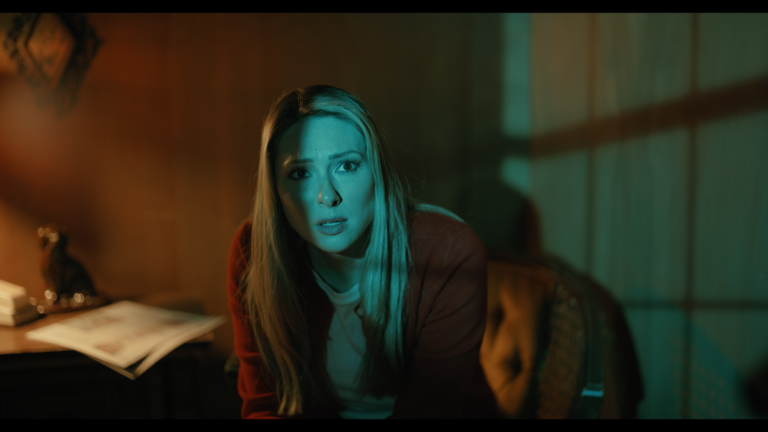
Showing the procedure on screen came with its own problem. “The simplicity of how the procedure looks disguises the intense work Dr. Fakorede is doing,” Kayiza said. “So we focused on people’s faces and the amount of concentration happening during the procedure, the level of detail and intricate nature of the procedure itself.”
Starting conversations in the exam room
The film comes with an impact campaign that speaks to both patients and doctors.
“One of the main goals of the impact campaign is creating a space for people to feel more empowered to have these types of conversations with their doctor and to ask questions, but also to help educate medical providers that peripheral arterial disease is something they should be monitoring with their patients,” Kayiza said.
She has already seen how that plays out in a room full of people with a stake in the issue.
“We had a screening in Atlanta at Morehouse School of Medicine,” she said. “In the audience were patients, medical providers and stakeholders, and there was the immediate impact of people seeing the film and understanding how it resonates.”
The response has reached her personal life too.
“So many people, family and friends and people I’ve met through making the film, have stories of, ‘My aunt or my uncle or my mom recently had an amputation,’ or ‘I recently got diagnosed with type 2 diabetes,’” Kayiza said.
Why the film is going online
Short films often travel the festival circuit and stop there. Kayiza wanted something different for Bloodlines, Mississippi.
“Oftentimes it’s easy for a film to get caught up in the festival circuit and be in the bubble of the film space,” she said. “It’s been fulfilling for me as a director to have this film’s home live in the places where it’s going to have the most impact.”
Putting it on YouTube and public television opens it to the people most likely to need it.
“Shorts are meant to be seen, and having it online is going to reinvigorate the life of the film,” Kayiza said.
Bloodlines, Mississippi is streaming on TIME Studios’ YouTube channel and will air on PBS through POV Shorts. Viewers can follow the film at @bloodlinesmississippi on Instagram, and find more of Kayiza’s work at kayiza.me.