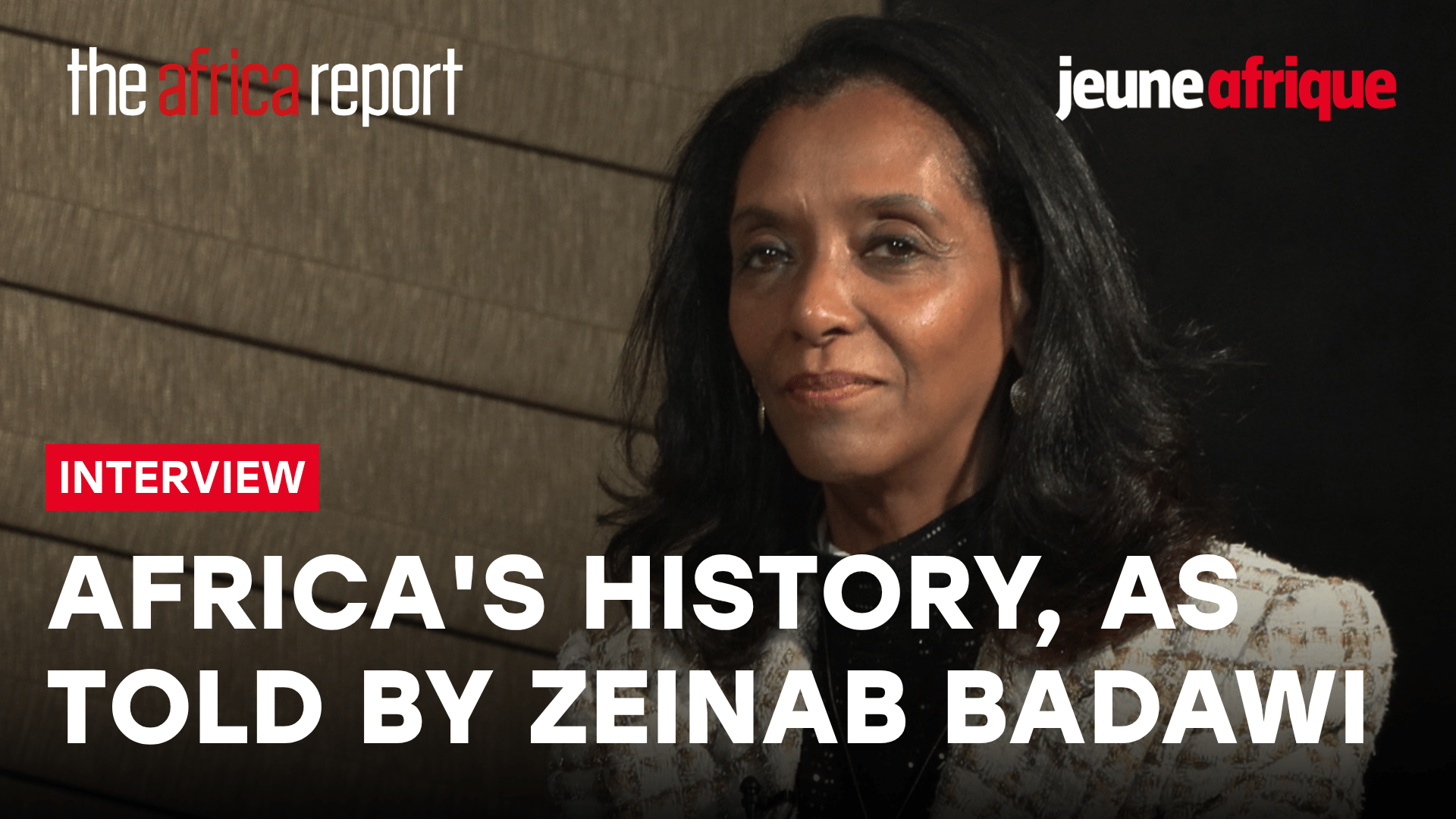
As Ethiopia and Eritrea trade fire and Sudan’s generals fight on, the broadcaster-historian argues that a shared past could be part of the way out.
Share
Zeinab Badawi set out to write a history of Africa that was not about coups, wars and famines. “You cannot reduce an entire continent to its difficulties,” she says. Her book, An African History of Africa, has sold more than 110,000 copies since it was published in 2024. The new French edition from Éditions du Faubourg is being co-published across francophone Africa. Yet read alongside this month’s headlines, its deep past looks less like a refuge from the news than a guide to it.
Take the Horn: the kingdom of Aksum, which adopted Christianity in the fourth century, straddled what are now northern Ethiopia and Eritrea. “You can’t divorce Ethiopia’s history from Eritrea,” Badawi says. The two states are trying to do just that, with guns. Eritrea cut diplomatic ties at the start of October.
Their forces have reportedly been trading artillery fire around Badme, the town over which they fought in 1998-2000. And Abiy Ahmed’s insistence on sea access for landlocked Ethiopia is heard in Asmara as a threat to the port of Assab.
Badawi, now the president of SOAS University in London, was born in Sudan. In 2019, the women who helped topple Omar al-Bashir called themselves Kandakas, after the queens of ancient Kush. Four years later, the two generals who had helped consolidate military rule — army chief Abdel Fattah al-Burhan and RSF commander Mohamed Hamdan Dagalo, better known as Hemeti — turned on each other.
To Badawi, this is “a power struggle” between two men from the same riverine, Arabised elite that has always dominated Sudan, while Darfur and Kordofan were shut out. Washington now says neither general has a future in Sudan’s leadership and the UN hopes to talk to the RSF before Christmas. Badawi is sceptical. The war will not end, she says, “until the costs of continuing the war become greater than the costs of ending it”, and not while outside backers keep both sides armed.
In the Sahel, juntas in Mali, Burkina Faso and Niger have ejected France and invited in Russia. Badawi reads this less as pan-Africanism than as a symbolic casting-off of “the colonial yoke”: the CFA franc, reserves held in Paris, entrenched French business. What follows is, in her words, a “shakeout”.
Her prescription is the book’s argument applied to politics. Borders drawn in Berlin in 1884-85 tempt each state to treat history as its private property. Read regionally, a shared past takes some of the tension out. Africa’s oldest stories, in other words, are not a distraction from its current crises… they may be part of the way out.
Nicholas Norbrook Managing Editor of The Africa Report


