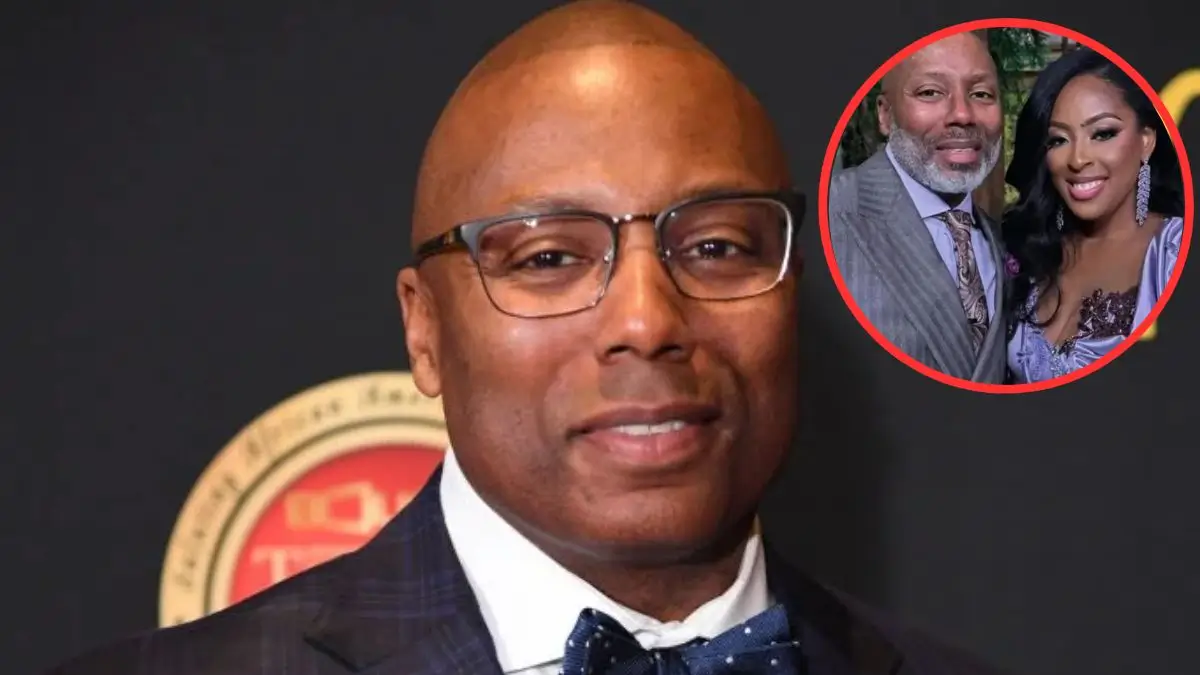
The Ready for the World frontman on authenticity, the music business and his new double album
Melvin Riley was 19 when Ready for the World went from Flint, Michigan, high school talent shows to a deal with MCA Records. As the group’s lead vocalist, co-founder and principal songwriter, he went on to write “Oh Sheila,” “Love You Down” and “Tonight,” hits that helped shape modern R&B and influenced artists from Usher to Alicia Keys. His “Oh Sheila” video jacket now sits in the Rock & Roll Hall of Fame’s collection in Cleveland.
Now Riley is back with No AI, a 19-track double album built on live instruments and real vocals, which has climbed the iTunes charts.
Why did you name the album No AI, and what message are you trying to send to the music industry with that title?
I have nothing against anyone doing AI. That’s the new thing a lot of people are doing, and kudos to whoever’s doing it. My label on my album, No AI, is just letting you know that this is authentic, real Keyboard sounds, real bass playing, real guitars, real singing, real backgrounds.
The way that we foundationally came up in R&B, pop, rock and roll, you put that work in, and there’s a different kind of spirit that comes off in your music when it’s coming from you and you’re playing off those strings. So that’s the message. AI is what they’re doing, but for Melvin Riley, the album is No AI, and that’s pretty much what I’m letting the world know.
Do you see AI as a threat to working musicians, or is there a way artists can use it without losing their authenticity?
I don’t think it’s a threat at all. If you’re a real songwriter, singer, producer, you’re still gonna do what you do. That blessing that God gave you, that talent, that’s not gonna be threatened at all if you’re the real deal.
If someone wants to use AI in their songs for this, that and the other, that’s something that they might want to hone their skills. Because music is spiritual. It’s not always about a machine, it’s about a spirit that comes off of music that makes you ride and say, oh, that’s my jam, that’s my hit, that’s that vibe.
Whatever AI is gonna be in the future, that’s whatever you want to do, but for me, I just like to get in the studio and really sing it and play it. The authenticity comes from putting that work in.
You’ve said this album is about bringing the heart back to music. Which song on No AI comes from the most personal space for you?
The 19 songs that are on the album are all personal space, because before I got to those 19, it was probably 40. So I cut down from that 40 to that 19.
Like a lot of people are saying, when you hit play on the No AI album, you don’t have to skip a track. Back in the day, you had jams after jams after jams. Take a Michael Jackson album, where you can just hit play, and the album just blows you away, Stevie Wonder. I think all of them are pretty much personal and dear to my heart that made the album.
Is there a particular track you would want people to check out first?
The new single is called I Can’t Stay Away. That’s a real heartfelt, backyard, swaggy, picnic, barbecue, kids playing and brothers playing cards type of vibe.
The first one that we came out with, They Won’t Leave Me Alone, that’s a real swaggy, bass-filled song. But the new single, I Can’t Stay Away, is probably that song I’m talking about, that backyard playing spades and that whole nine, and you can just sit back and ride, too.
You signed to MCA Records at 19. What do you know now about the music business that you wish you had known back then?
I think just understanding the business of music, understanding how it operates. Back in the ’80s, a lot of managers would sign you, labels would sign you, but it was up to your attorney to sit you down and teach you the algorithms of what music and the music business is all about.
Thank God I learned early, I would have loved to have learned even earlier, but my attorney, Kendall Minter, sent me the literature, and through my conversations with him, my eyes were open to this industry.
That’s one of the big things about this music thing that you really need to know. Understand the business of it, your talent is one thing. You can be a surgeon but not have any business skills on how to operate your business. You can be the greatest dentist but not really understand how to operate the business of your office. The same with music. You can be a great singer, a great musician, but if you don’t know how to run that business, you can end up in a place where it takes away that whole energy that you had. So get your business right. That’s the real deal.
Your “Oh Sheila” video jacket is now part of the Rock and Roll Hall of Fame’s collection. What did that moment mean to you?
It was huge. They sent me a letter and said, hey, we would love your memorabilia to put up in the Rock and Roll Hall of Fame. For them to acknowledge that, it’s huge, because it lets you know that you’ve made a mark in this world of music, coming from wherever you came from. Now this one huge symbol of music, which is called the Rock and Roll Hall of Fame, asks you for a portion of what it is that you have.
Now my grandkids, through the years, they can always visit Cleveland and go to the Rock and Roll Hall of Fame, or my children, and say, hey, that’s my dad, he did something significant in this music world.
You are supporting UNAP, a social app for artists with no algorithm deciding who gets seen. Why does that matter for independent musicians right now?
Musicians, artists, go through a tunnel, step after step, to be heard. There’s so many things that can get in the way of the world hearing your talent. And then finally, we have an app like UNAP, where you can put your video out there, and everyone that’s on UNAP gets to see you.
So it’s a community of people that, when you join and you put a record out, everybody gets to see what you put out there. There’s no gatekeepers, there’s no algorithms to keep the world from hearing your music. That’s why I like to talk about UNAP, because if you’re an artist and you want somebody to see you and hear you, put your music out there.
What’s next for you, and where can fans find No AI?
You can find No AI on everything. Spotify, Apple Music, Deezer. It’s on all of your platforms. You can also, of course, go to iTunes and download the album, which we definitely would love.
My social medias are @iammelvinriley on Instagram, and Facebook is Melvin Riley, or Melvin Riley of Ready for the World. Being the lead singer, the main writer, I don’t want to lose that association with Ready for the World, because songs I’ve written, like “Oh Sheila,” “Love You Down,” “Tonight,” these big hits that have become ingrained in our musical culture, I definitely want people to understand that I do come from Ready for the World, and still am ready for the world.
No AI is available now on Spotify and Apple Music.