Special to The Mississippi Link,
Enhancing Mississippi’s local news industry while preparing the next generation of journalists took center stage in Hattiesburg, MS, known as the Hub City, Oct. 28-29.
Press Forward Mississippi’s 2026 Community Journalism Workshop and the Mississippi Scholastic Press Association’s fall convention brought together journalists, educators, media professionals and aspiring high school journalists at the University of Southern Mississippi. Press Forward Mississippi is a statewide coalition of foundations, led by the CREATE Foundation, working to strengthen communities through sustainable, trustworthy local journalism.
More than 550 students attended the scholastic press convention. The event energized educators as well.
“It was my first year to attend this MSPA convention, and I enjoyed everything as if I were a student,” said Roishina Henderson, journalism teacher and student publications adviser at Amanda Elzy High School in Greenwood, one of 18 schools participating in the Mississippi High School Journalism Project.
The two-day gathering emphasized journalism education while exploring artificial intelligence, investigative reporting, community engagement and innovative strategies for sustaining local news.
Exploring the future of local journalism
According to organizers, Peter Imes, fourth-generation publisher of The Commercial Dispatch and president of the Mississippi Press Association, delivered the keynote address, “Leading Local News in Your Hometown.”
Other featured participants included Toby Barker, mayor of Hattiesburg, and Melissa Milios Davis, director of grantmaking for Press Forward, who discussed journalism’s evolving role amid the growth of social media and digital platforms.
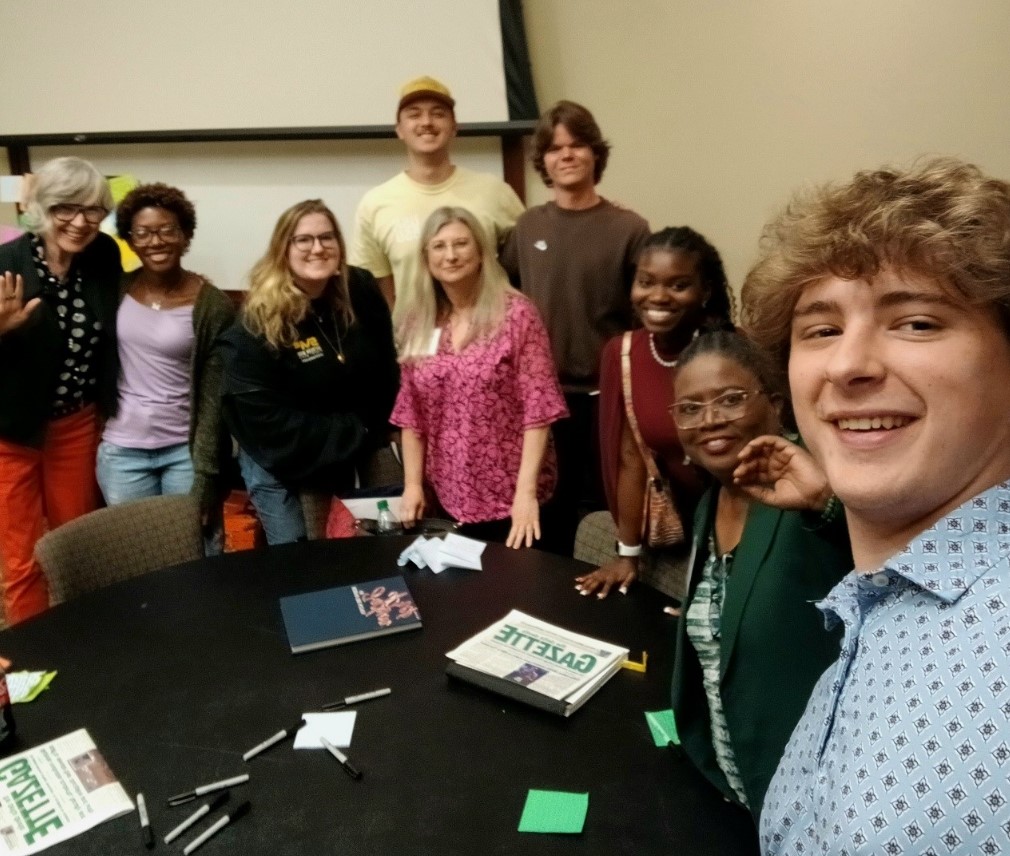
Torsheta Jackson, systemic and solutions editor for the Mississippi Free Press, facilitated an interactive session envisioning Mississippi communities in 2036 and the role quality journalism could play in strengthening them.
Using sticky notes and solution boards, participants shared ideas during roundtable discussions that included journalism professionals, educators and students.
“I found this session to be highly engaging and effective,” said Gail Marshall Brown, Ph.D., assistant professor of journalism and public relations at Mississippi Valley State University.
“At our table, it was refreshing to witness the collegiate passion, interest and concern for higher-quality and trusted community journalism in Mississippi.”
Brown recalled a discussion with a student from Petal who noted that many young people receive their news primarily through social media rather than newspapers. Several media professionals agreed.
Brown, who also advises the Delta Devils Gazette, emphasized the importance of recognizing diverse news preferences.
“While many people today turn to social media and digital platforms for news, there are, no doubt, a significant number who still seek to read the printed newspaper with their morning coffee,” she said.
Practical takeaways for local news
Welcomed by Mike Clayborne, president of the CREATE Foundation, and Edgar Simpson, director of the USM School of Media and Communication, attendees explored audience-centered reporting, newsroom sustainability, investigative journalism and artificial intelligence.
High school journalism expansion
Attendees also learned about efforts to expand the Mississippi High School Journalism Project in the Mississippi Delta, a region where many communities face limited local news coverage.
The project, led by nonprofit organization The Bell and supported by Press Forward Mississippi, provides training, resources and mentorship to help public high schools establish journalism programs and student newsrooms.
The Bell was founded in 2017 by former teachers and journalists Adrian Uribarri and Taylor McGraw to expand opportunities for youth journalism and student storytelling.
AI and investigative reporting
One of the event’s most compelling demonstrations showed how AI tools can assist journalists covering public meetings.
Presenter Sean Mussenden, director and executive editor at the Howard Center for Investigative Journalism, demonstrated how ChatGPT can transcribe, summarize and identify potentially newsworthy topics from government meeting recordings.
Using footage from a school board meeting, the AI generated a list of issues that could warrant further reporting. The exercise illustrated how AI can help journalists identify story leads while reinforcing the need for verification, accuracy and editorial judgment.
Audience-centered reporting, newsroom sustainability, and a tangible MSPA takeaway
Another highlight was “Inside Audience-Centered Reporting,” presented by Emily Caballero, assistant news director at WLBT News, and moderated by Marisa Kwiatkowski, director of journalism for the Knight Foundation.
Caballero used WLBT’s award-winning yearlong Fight the Blight project as an example of audience-centered reporting, a strategy that begins by listening to community concerns and then investigating issues that affect residents’ daily lives.
She explained how viewers continue to contact award-winning reporter Roslyn Anderson and the WLBT investigative team about neglected and dilapidated properties, particularly in the Jackson area. Some investigations prompted property cleanups and other positive community outcomes.
Other sessions explored journalism research, future opportunities for collaboration and practical newsroom tools.
During the session, “What’s Next and How You Can Get Involved,” Bruce, executive director of the Mississippi Press Association, discussed new business models for sustaining local news organizations.
A central priority of Press Forward Mississippi is developing new models for trusted local news. The message throughout the workshop was clear: Mississippi media organizations must adapt to the digital age through innovation, collaboration and sustainable business practices while maintaining public trust.
“I learned some great tips and techniques in the [MSPA] photography and yearbook design sessions that I will be implementing in our student publications,” Henderson said.
“I was also impressed with the students from across the state and their knowledge of layout design and professional photography. It feels good to know we’re in good hands with the next generation of journalists and photojournalists.”
Partners in the 2026 Community Journalism Workshop included Press Forward Mississippi, the Roy Howard Community Journalism Center at the University of Southern Mississippi, the Mississippi Press Association, the Mississippi Association of Broadcasters, the Mississippi Scholastic Press Association, and participating journalism programs from the University of Mississippi, University of Memphis, University of Maryland, and Arizona State University.


