On November 13, Beyond Cancer Alley: A Descendant-Led Journey Through Louisiana’s River Parishes brought together more than 40 frontline environmental justice organizers from the Gulf South, Appalachia, the Permian Basin and beyond, along with local residents, for a solidarity bus tour through Southeastern Louisiana along the Mississippi River.
The route included the unveiling of public art installations, including 10 commemorative street signs and a monumental town welcome sign. Each connected the region’s fight against industrial pollution to generations of organizing to defend the land and community.
The journey was co-produced by The Natural History Museum in collaboration with The Descendants Project, a Wallace-based nonprofit founded in 2020 by twin sisters Jo and Joy Banner. The tour moved through industrial corridors and historic Black communities, revealing how the histories of extraction and liberation occupy the same ground and how descendants are drawing on both to shape what comes next.
Beyond-Cancer-Alley-tour_Mapping-Freedom (Andrea-Rollefson)
A Name Outsiders Gave
The 85-mile-long stretch of land along the Mississippi River between New Orleans and Baton Rouge is known to outsiders as “Cancer Alley.” It holds one of the country’s densest concentrations of petrochemical facilities, many built on former plantation land. But the nickname tells only part of the story, and the people who live there know it.
Advertisement
“In many ways, I hate using it,” said Jo Banner, co-founder of The Descendants Project, who led the tour. “This is my home. This is where my mom grew up, and this is where my grandparents grew up.”
Mapping Histories of Freedom and Resistance
The journey also marked the unveiling of Mapping Freedom: Signs of Resistance & Reclamation, a public art installation that allows descendants to put their histories of freedom and resistance back on the map, literally.
The 10 unofficial street signs commemorate histories that rarely appear on official maps or in place names, from the 1811 German Coast Uprising and Maroon communities to Black Union soldiers, jazz pioneers and collective victories against industrial expansion.
Each sign names a “Passage,” referencing the escape routes and settlements of people who resisted enslavement. The wording connects earlier freedom struggles to the environmental justice fight taking place today.
Advertisement
Mapping Freedom_Charles Deslondes-Woodland Plantation-photo credit- Jason Jones
“These signs show how we would name our community if we had the chance and the choice,” Banner said. “They speak to our freedom, our liberation, and our hope. They make visible histories that have been hidden and affirm our ability to tell our own story.”
Seven of the street signs were mounted on property owned by The Descendants Project, while three were displayed by community members along the tour route.
At the street sign on East 26th Street near the Denka Performance Elastomer plant, Tish Taylor of Concerned Citizens of St. John, an organization founded by her father, Robert Taylor, recalled neighbors by name and house, recounting the cancers and rare illnesses affecting people who had lived there.
The chemical plant was once the country’s only neoprene manufacturer. However, it announced in May 2025 that it would halt operations after years of scrutiny over chloroprene emissions. The U.S. Environmental Protection Agency classifies chloroprene as a likely carcinogen.
Advertisement
At Woodland Plantation in LaPlace, three signs honored the 1811 uprising, its organizer Charles Deslondes and jazz pioneer Edward “Kid” Ory. The uprising began at Woodland on January 8, 1811, and is widely acknowledged as the largest revolt of enslaved people in U.S. history. Ory was born on the property in 1886.
The Descendants Project acquired Woodland in 2024, making the Banner sisters its first Black owners in more than two centuries. The organization is transforming the former plantation into a descendant-led museum and cultural center.
Twenty minutes from LaPlace, in Wallace, artist Breanna Thompson painted an eight-by-twelve-foot welcome sign bearing the words “Welcome to the Emancipated Community of Wallace.”
The sign depicts Black Union soldiers at rest, looking toward the future as they watch their descendants dance, grow food, play music and gather around a levee bonfire. Its title comes from a U.S. Army Corps of Engineers document that recognized Wallace’s history as an emancipated community amid a fight against forced displacement disguised as proposed industrial development.
Advertisement
The Emancipated Community of Wallace sign_Breanna Thompson painting- photo credit-Andrea Rollefson
A History of Holding the Line
Resilience and resistance are common threads in the stories shared along the route.
Residents stopped a proposed Formosa rayon plant in the early 1990s. Decades later, a grain export terminal proposed for the same land faced similar opposition. In August 2024, Greenfield Louisiana announced it was halting its $800 million Wallace Grain Export Facility, citing delays in federal permitting. The Descendants Project had spent years opposing the project, including through court proceedings.
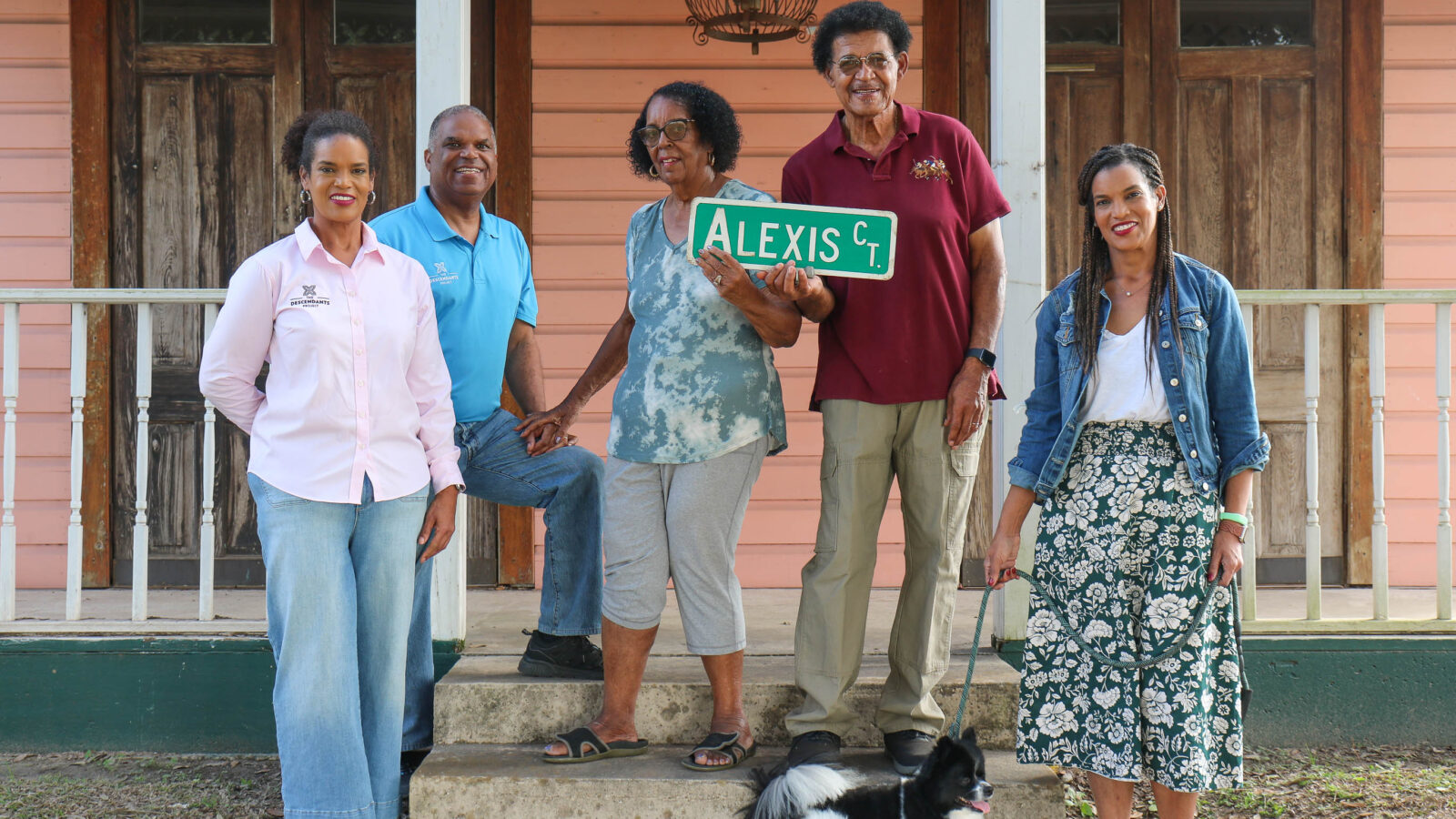
On Alexis Court in Wallace, signs reading “People Over Formosa Passage” and “People Over Greenfield Passage” honor those victories, while “Liberation from Industry Passage” points toward the future descendants are working to build.
Although the proposed industrial developments have been halted, the land’s future use remains contested. Zoning disputes continue, and efforts to secure historic protections for Wallace are ongoing.
Advertisement
Mapping Freedom_Liberation from Industry Passage – Photo Credit: Andrea Rollefson
“Street signs tell us whose history counts and who gets to decide what a place becomes,” said Beka Economopoulos, director of The Natural History Museum. “Here, descendants took those signs into their own hands, making histories of freedom visible on land they are still fighting to protect.”
The Descendants Project plans to pursue permanent installation of the street signs. Mapping Freedom is part of Words Are Monuments, The Natural History Museum’s multi-year initiative that uses place names and public memory to support community struggles over land, history and self-determination.
Reclaiming the Land and the Future
Beyond Cancer Alley_Community dinner-Wallace_John Gray Quartet- photo credit: Abdul Aziz
The day concluded with an outdoor dinner and community celebration beside the sugarcane field where the Greenfield terminal would have stood. The John Gray Quartet performed live jazz, including music by Kid Ory. Gray, a trumpeter and music educator, is a descendant of people enslaved at Evergreen Plantation in nearby Edgard.
The Descendants Project envisions regenerative agriculture and community-centered development on land once threatened by industrial expansion. Standing beside the field, Banner told neighbors and visiting organizers that the work ahead was “to liberate this land and to use it to serve the communities.”