Donald Trump’s posthumous pardon of Pete Rose reignites debate over the baseball legend’s gambling scandal and his exclusion from the Hall of Fame.
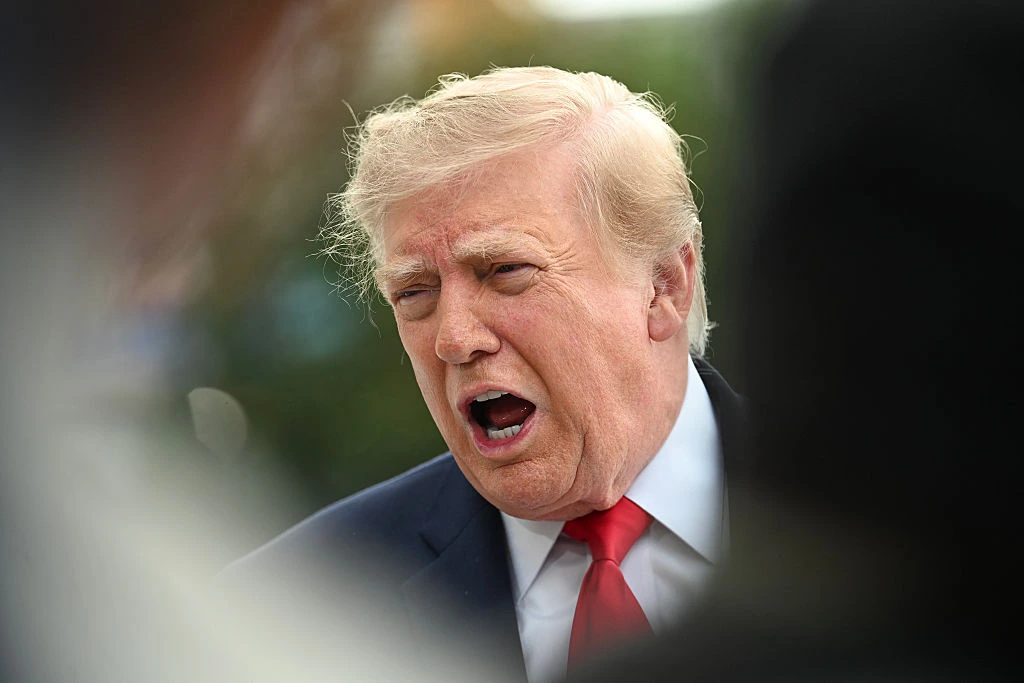
Trump’s posthumous pardon of Pete Rose sparks backlash as critics question his motives and revisit the baseball legend’s scandals. (Photo by SAUL LOEB/AFP via Getty Images)
What to Know Trump pardoned Pete Rose for his federal tax convictions, but the move does not erase his baseball gambling violations.
Rose became eligible for Hall of Fame consideration in 2025, but induction remains outside Trump's presidential authority.
Critics questioned Trump's priorities as the baseball legend awaits his next opportunity for Hall of Fame consideration in 2027.
Donald Trump has found another sports legend he believes deserves a second chance.
The only problem is that the man has been dead for two years, and the president’s latest act of forgiveness cannot deliver the one honor he really wants for him.
The president has spent years defending athletes whose careers were overshadowed by scandal.
Now, he is using the power of the White House to settle an old baseball score. His latest move has critics questioning his priorities and wondering why he is so invested in rewriting sports history.
On Thursday, Nov. 19, Trump announced a posthumous pardon for Pete Rose, Major League Baseball’s all-time hits leader over 24 seasons from 1963 to 1986, mostly with the Cincinnati Reds.
Rose died in September 2024 at age 83.
“I have just given a Complete and Total Pardon to the Late, Great Pete Rose,” Trump declared on Truth Social.
He praised the 17-time All-Star’s 4,256 career hits but mistakenly claimed the record was achieved in one season.
Rose’s criminal troubles began when he pleaded guilty in 1990 to two felony counts of filing false federal income tax returns. He failed to report $354,968 in income over four years, including money from autograph appearances, memorabilia, and gambling-related activities.
The three-time batting title winner served five months in federal prison. He also paid a $50,000 fine and repaid the IRS $366,042, according to The Associated Press.
But Trump’s pardon does nothing to erase the scandal that cost Rose his place in baseball history.
In 1989, Rose accepted a lifetime ban after an investigation found he had wagered on baseball games, including games involving the Reds while he was managing the team. He denied betting on baseball for years before admitting it in 2004.
Trump insists Rose had suffered enough.
He accused MLB of treating the legendary player terribly by keeping him out of the Hall of Fame, adding, “Politics, I guess!”
The president had already helped push the issue forward.
In May 2025, Commissioner Rob Manfred ruled that permanent bans end when a player dies, making Rose eligible for Hall of Fame consideration.
However, Rose’s potential induction remains in the hands of the National Baseball Hall of Fame Classic Baseball Era Committee, not Trump.
The decision quickly drew backlash from critics online.
“Pardoning a rich dead fraudster while ignoring the multiple grave comcerns of living everyday Americans seems like the ultimate Trump behavior,” one person tweeted.
Another wrote, “Pardons are supposed to be for people you think were wrongly convicted. Not people who paid you off. Not people you think are cool.”
One person asked, “Pardon Rose for what? Dumpty Trumpy has no control over MLB or how it treats folks that break its rules and try to lie about it.”
More questions came: “Will he do ANYTHING that really matters?!?! Besides ruining the country.”
Trump’s fascination with Rose goes beyond baseball.
In April, he laughed off questions about a soldier accused of insider betting, comparing the case to Rose betting on his own team.
By August, Trump was attacking Hall of Fame voters over former pitcher Roger Clemens, calling them jealous. Critics connected his outrage to his own repeated claims that he could have become a professional baseball player.
The president has also pardoned former baseball star outfielder Darryl Strawberry and several retired NFL players. His growing list of sports-related pardons has made clemency another arena for celebrity intervention.
Rose’s next opportunity for Hall of Fame consideration comes in December 2027, with possible induction in 2028, according to Reuters.
Trump may have delivered the pardon, but Cooperstown still gets the final call.