The sinking of a Russian warship in Libya exposes the vulnerability of Moscow’s military logistics network, which sustains its growing influence across Africa.
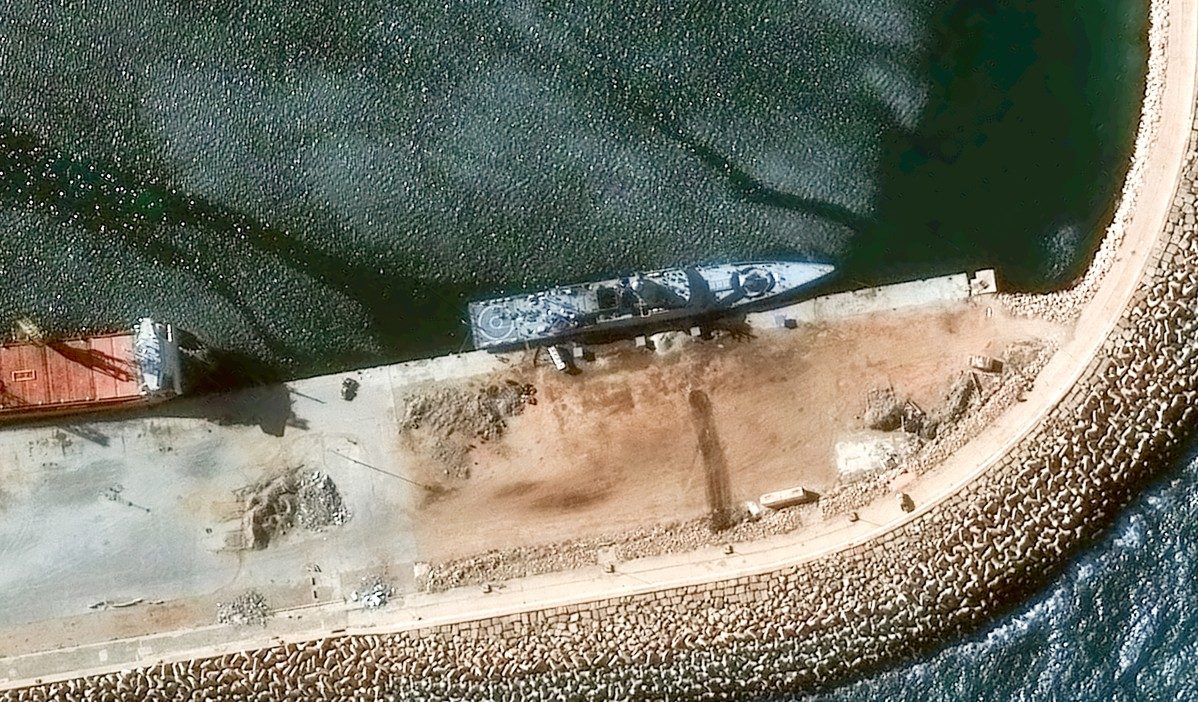
A view of a Russian ship docked at the Benghazi port before a strike on 21 November 2026 © Vantor
Share
A Russian warship was supposed to be safe in Benghazi, some 2,400km from the front lines in Ukraine. On 22 November, that assumption was shattered. Ukrainian naval drones struck the Merkury, one of Russia’s newest corvettes, while it was docked at a naval base in eastern Libya. Satellite images show the vessel capsized. President Volodymyr Zelensky claimed responsibility the following day, reports Reuters, saying seven Ukrainian-made drones had sunk the ship and destroyed a helicopter on board.
Zelensky also said Ukrainian forces had struck the MV Angara, a cargo vessel which Kyiv says was used to transport military equipment. Russia’s defence ministry did not immediately comment. Libya’s eastern administration, which is allied with Moscow, confirmed an explosion aboard the warship, which it said had stopped to refuel and resupply.
The significance of the attack extends well beyond the loss of a warship. Libya has become an important staging post for Russia’s military operations across Africa. Moscow has cultivated close relations with Khalifa Haftar, the military strongman who controls much of eastern Libya, securing access to ports and air bases that underpin its wider African presence.
African ports and the Africa Corps
A November investigation by C4ADS, a Washington-based research organisation, documented how Russian vessels transport military equipment to Africa. Using satellite imagery, shipping data and other open sources, its researchers identified 12 ships potentially involved in supplying Russia’s Africa Corps, the military formation that has largely replaced the Wagner mercenary group.
Three ports stood out: Tobruk in Libya, Conakry in Guinea and Lomé in Togo. Equipment shipped to the latter two has reportedly travelled onwards to Mali, where Russian forces support the country’s military rulers. C4ADS found evidence of armoured vehicles, trucks and other military equipment moving along these routes. Russian naval escorts have sometimes accompanied the cargo vessels.
READ MORE Africa Corps convoy circumvents sanctions in hazardous new route to Mali
The Benghazi operation therefore raises the stakes for Moscow. Ukraine’s security service says the Merkury regularly escorted Russian military convoys, including the Angara. Although there is no evidence yet that Sunday’s strikes have disrupted supplies to Africa Corps, they demonstrate the vulnerability of the ships protecting Russia’s African deployments.
A suspected Ukrainian attack on another Russian military-linked freighter in the Gulf of Finland on 21 November suggests a campaign extending far beyond the Black Sea.
And another ship, the Dakar, a 22-year old oil tanker under a Cameroon flag but part of the shadow Russian fleet, reportedly departed Saint Petersburg on 31 October and is currently heading towards Senegal, with an estimated arrival around 24 November. This vessel was put on the EU sanctions list, just like the Angara, which is on both EU and US sanctions lists.
Libya entangled
Libya itself risks becoming more deeply entangled in the conflict. In April, the Associated Press reported, citing two Libyan officials, that Ukrainian drone specialists were operating from bases in western Libya, notably Misrata, under a covert arrangement. The officials linked them to an earlier attack on a Russian tanker in the Mediterranean.
Osama Hammad, prime minister of Libya’s eastern administration, has now asked the UN to investigate whether Sunday’s drones were launched from western Libya and whether Ukrainian military personnel are operating there. Kyiv’s security service says the drones were launched from a mothership, without establishing where the operation originated.
READ MORE US gamble on Libyan elite risks locking in chaos for oil
The internationally recognised government in Tripoli has meanwhile warned against involving Libyan ports in foreign conflicts. The UN has called for an independent investigation.
For Ukraine, the attraction is clear: strike Russia’s military reach far from home. For Moscow, protecting its African supply lines could become considerably more expensive. And for Libya, already divided between rival governments and their foreign patrons, another country’s war threatens to make its own divisions more dangerous.
AFP
The Africa Report