In the United States, late November through early January marks the winter holiday season, when families, friends and communities come together for feasts and celebrations. Regardless of the holiday observed, this season is one of the most wasteful times of the year in terms of trash produced and energy consumed.
“The holidays are an expensive time, and money is tight in many households, and food prices are really high,” said Dr. Roni Neff, a professor at John Hopkins Bloomberg School of Public Health, during a recent media briefing. “We’re spending a lot of money on the food we’re throwing out … and who wouldn’t want to have that extra money … at this time, especially?”
As the planet faces the consequences of intense climate change driven by increased greenhouse gas emissions and experiences unprecedented energy and electricity demand during the transition from the Digital Age to the Artificial Intelligence (AI) Age, sustainable practices become increasingly necessary during the holidays.
“We expect the U.S. electric power sector to generate almost 4,390 billion kilowatt-hours in 2026, up 2.7% from 2025, driven by rising demand from the commercial sector and increased cooling needs from warmer-than-average summer temperatures,” reported the U.S. Energy Information Administration in its most recent Short-Term Energy Outlook. “ [Electricity prices for] most hubs remain near 2025 levels, while wholesale PJM prices rise 41%.”
Below are three ways to think more environmentally friendly this holiday season.
Leftovers … Again: Think Twice Before Throwing Them Away
It’s easy to make too much food for a big dinner or get sick of leftovers quickly. Still, before tossing extras and scraps in the trash, it’s important to recognize how serious food waste is and consider greener alternatives.
Landfills are the third-largest source of human-related methane emissions in the U.S., and food is the largest component of municipal solid waste in these disposal sites. According to the Environmental Protection Agency (EPA), food loss climbs 25% during the winter holiday season, especially during Thanksgiving. In 2025, discarded food during the last full week of November reached approximately 166,500 metric tons, according to a study by researchers from Penn State and Ohio State University.
To reduce the amount of scraps thrown in the trash, those cooking for holiday feasts should start by accurately calculating how much food will be needed for the number of guests they will feed, especially since 75% of consumers in 2025 made more than was needed. Hosts can also tell their guests to bring reusable containers to take leftovers home, easing the burden of trying to finish all the extra food.
For those making whole birds for large dinners, saving leftover carcasses to make stock or bone broth provides a rich base for stews and soups made in the future. Additionally, leftover meat can be used as an ingredient in other dishes, such as using extra turkey to make sandwiches or stirring leftover ham into omelets.
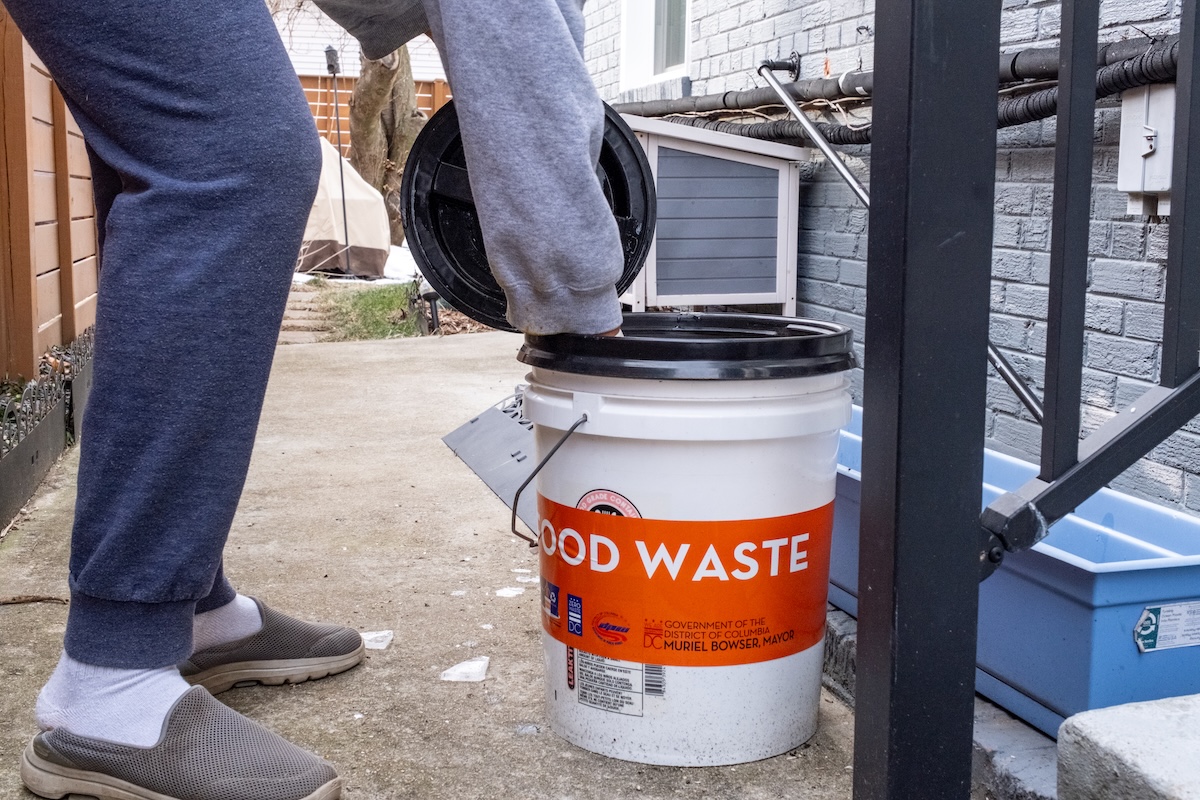
Consumers can also practice regenerative agriculture by building a backyard compost pile. A balanced batch includes the following: water; oxygen; nitrogen-rich materials such as produce scraps, coffee grounds, paper filters, crushed eggshells, and grass clippings; and carbon-rich materials such as dry leaves, twigs, and shredded paper or brown bags. Washingtonians can also drop compost scraps off at any of the many Food Waste Smart Bins located throughout the city or at designated waste drop-off events.
Food waste reduction can be considered at every stage of cooking a meal, and each effort helps decrease emissions from landfill waste and preserves the planet’s health.
There’s Food at Home: Locally Sourcing a Holiday Feast
Before buying meat for a holiday dinner at a supermarket or grocery store, consider visiting the local butcher shop or using local farm meat delivery services. By opting for these alternatives, shoppers can access fresher, more nutritious meat raised under sustainable farming practices and support local agriculture.
**FILE** Before buying meat for a holiday dinner at a supermarket or grocery store, consider visiting the local butcher shop or using local farm meat delivery services. (Roy Lewis/The Washington Informer)
Compared to conventionally produced retail meat, local meat is leaner and contains 47% more omega-3 fatty acids, primarily alpha-linolenic acid (ALA), which support heart health, brain function and can reduce inflammation. These meats have a higher concentration of vitamins A and E, which can support immune function and cell growth. Livestock on small and family-owned farms are usually fed natural diets without additives and raised on open pastures using rotational grazing practices– conditions that benefit their health and, in turn, consumer nutrition.
Similarly, buying produce from local farmers benefits both public and environmental health, offering customers more nutrient-dense fruits and vegetables. Farms in the District often prioritize regenerative practices that protect, restore and revitalize the region’s soil, biodiversity and ecosystems. Nationally, produce travels an average of 1,500 miles from harvest to the dinner plate, and the longer it stays in transit, the more nutritional value it loses. Sourcing produce from farms in and around the region shortens the supply chain, potentially resulting in lower emissions and higher nutrient content.
Buying food raised or grown nearby may be easier than expected in Washington, as the city has a reliable network of local food options, including about 72 butchers and specialty markets and 236 urban agriculture sites.
Lights Out: Saving Energy, Lowering Costs
Aside from producing large quantities of waste, the holiday season is also notorious for the amount of energy needed to sustain activities and traditions. Energy consumption in the U.S. usually peaks during the hotter summer months, but a second peak occurs during the winter months — especially in December.
Due to festive lights, heating needs in colder weather, and large gatherings, energy usage increases approximately 30% nationwide during the last month of the year. According to Arcadia Power estimates, Christmas lights across American households use 3.5 billion kilowatt-hours — enough energy to power more than 350,000 homes for one year. With increased utility bills that continue climbing, conserving energy is essential to saving money and protecting the grid’s reliability.
**FILE** Due to festive lights, heating needs in colder weather, and large gatherings, energy usage increases approximately 30% nationwide during the last month of the year. (Robert R. Roberts/The Washington Informer)
Switching to LED bulbs and setting automated timers that turn lights on when the sun sets and off at bedtime are some primary ways to reduce energy consumption from holiday decorations. Smart power strips are also an effective way to mitigate energy usage because they cut off power going to electric products that are turned off or on standby. According to the Lawrence Berkeley National Laboratory, standby power accounts for 5-10% of energy use in a residence, making smart power strips an effective way to reduce consumption.
To lower the demand from heating a house, consumers can lower their thermostats when having guests over or when using kitchen appliances, as increased body heat or prolonged cooking can naturally warm indoor spaces. Instead of turning up the heat, residents can open curtains on south- and west-facing windows during the day and close them at night to take advantage of peak sunlight hours, using natural light to warm up the home. If a home has a ceiling fan, making sure the blades rotate clockwise in the winter helps draw warm air from the ceiling and distribute it around the room.
Every intentional adjustment, even the small ones, plays its part in protecting the environment, especially during a season when consumption and waste tend to increase. The winter holidays bring forth human connection, cheer and gratitude — all things that don’t need to be experienced at the Earth’s expense. This holiday season, sustainability and environmental consciousness can become traditions carried into the new year.
“Even people who place high value on protecting the environment are not automatically willing to pay more to reduce the impact of their holidays,” said University of Portsmouth professor Yuksel Ekinci in an October 2026 statement. “Understanding that gap is important if we want to develop carbon-offset schemes that people are willing to support.”