Many families in America celebrate what is believed to be a joyful feast between Pilgrims and Native Americans today, though the holiday has taken on different meanings. Thanksgiving Day, for some, is a time to spend with family, give thanks and enjoy delectable recipes. Others look forward to it because it is yet another day away from the pressures of work and school.
Essentially, Thanksgiving is celebrated to give thanks for the fruits of the previous harvest. In America, the celebration dates back to 1621, when the harvest was celebrated by the Pilgrims who had sailed from England on the ship Mayflower in September 1620 and were now settlers of the Plymouth Colony in what’s now called Massachusetts.
But other accounts debunk any sort of happy feast between Pilgrims and the Native Americans at the time and rather describe the situation as white colonists who invaded a land, claimed it as their own, and slaughtered the indigenous people of the land in what is called the Pequot War between the settlers and the natives.
Historians do not also agree about when the first Thanksgiving was held. Additionally, they have yet to find any concrete proof that turkey was on the menu in late 1621 when the Pilgrim settlers of Plymouth Colony sat down with indigenous Wampanoag people for what is now considered the first Thanksgiving celebration.
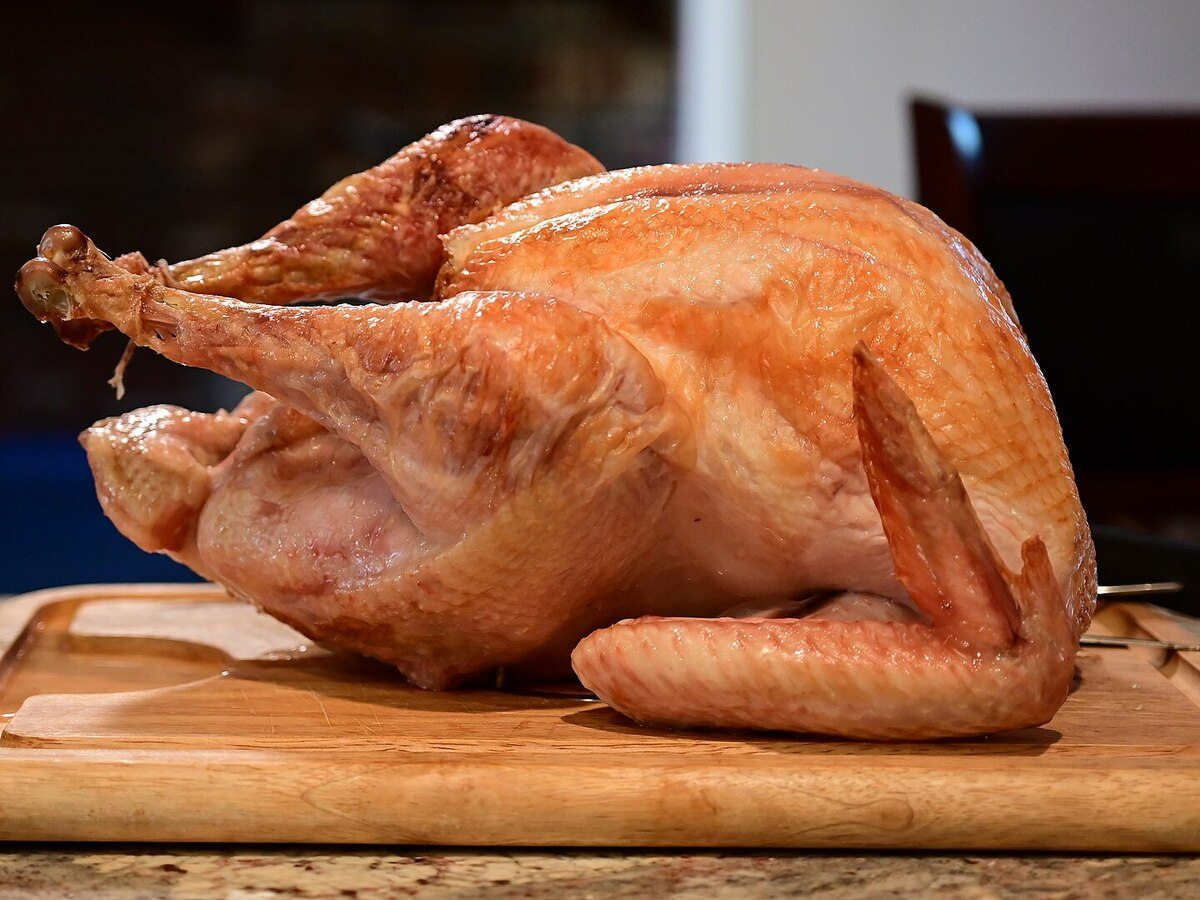
Still, a 2025 survey shows that about 87 percent of Americans eat turkey on Thanksgiving alongside other meals such as yams and sweet potatoes, macaroni and cheese, mashed potatoes and gravy.
So how did turkey become the main dish for the holiday?
According to a letter written by colonist Edward Winslow to a friend back in England about the 1621 event, the colonists hunted for “fowl” for the feast. Winslow, however, didn’t mention what kind of fowl; it could have been turkey, goose or duck.
What is known is that the settlers and Native Americans dined on venison, fish and shellfish as well as corn and other vegetables, according to History.com.
Some historians say that there were a lot of turkeys in the region when the Pilgrims arrived, with wild turkeys in North America being more than 10 million before European settlement began. Elan Abrell, a cultural anthropologist, told History.com that Spanish explorers brought wild turkeys from Mexico and Central America to Europe in the 1500s.
“They were probably more often being eaten by wealthier people [than the Pilgrims], but it’s quite possible the Pilgrims knew what turkeys were already,” Abrell said. “I can’t imagine a reason why they wouldn’t have hunted them, because turkeys are relatively easy to hunt and feed more people than smaller birds.”
Thus, while turkey wasn’t the main meal in 1621, it became popular as a source of protein for subsequent annual autumnal harvest dinners. Turkeys were seen as larger than chickens, geese, and ducks, making them the perfect meal to serve to a crowd. Turkeys also didn’t provide milk or edible eggs, so North Americans could easily raise them for meat.
Nevertheless, turkeys were not directly linked to Thanksgiving until the mid-19th century. Sarah Josepha Hale, a writer and magazine editor, lobbied for the idea of a national Thanksgiving holiday. President Abraham Lincoln listened and declared Thanksgiving a national holiday in 1863, to take place on the last Thursday of November.
Thanksgiving had been an unofficial New England holiday before this, with turkey usually served during celebrations because it was large enough to feed a lot of people, plentiful, and cheap.
In her first popular novel, Northwood: A Tale of New England (1827), Hale describes a Thanksgiving table with roasted turkey, gravy, and vegetables: “The roasted turkey took precedence on this occasion, being placed at the head of the table; and well did it become its lordly station,” she writes, “sending forth the rich odor of its savoury stuffing, and finely covered with the frost of its basting.”
As a matter of fact, Hale published turkey recipes in her magazine, Godey’s Lady’s Book, while she was urging leaders to make Thanksgiving a national holiday. Hence, by the time Thanksgiving became official, turkey had become largely synonymous with the holiday.
Today, according to the USDA, Americans eat more than 46 million turkeys on Thanksgiving Day, with the variety of side dishes served reflecting the country’s rich multicultural fabric.