Spread the love
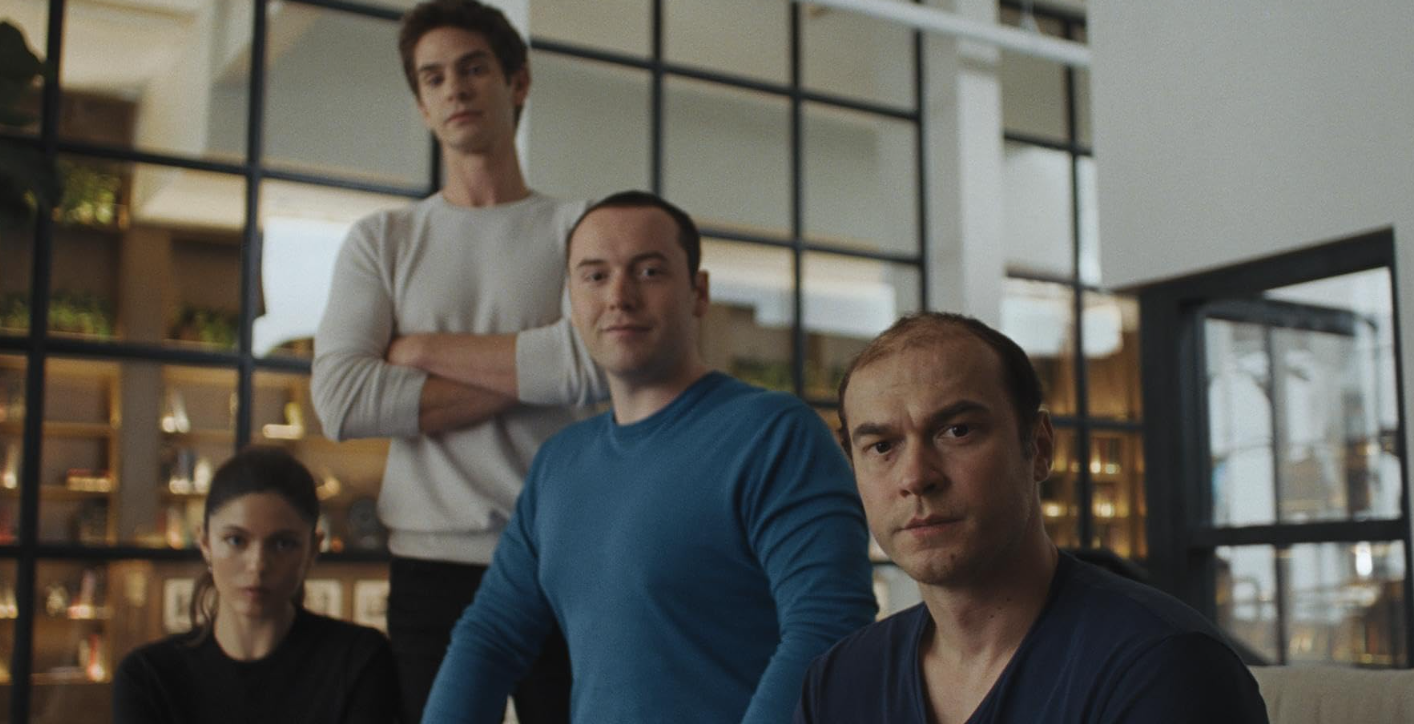
Artificial intelligence has become one of the most consequential technological developments of our time, but behind the algorithms, scientific breakthroughs, and billion-dollar companies are human beings driven by ambition, idealism, and the pursuit of power. In director Luca Guadagnino’s latest film, Artificial, audiences are taken behind the scenes of the personalities and relationships that helped shape the rise of OpenAI and the technology that continues to transform society.
Written by Simon Rich, the film stars Andrew Garfield as OpenAI CEO Sam Altman and Monica Barbaro as technology executive Mira Murati. The story explores the tensions surrounding the company’s leadership, particularly the competing visions of Altman and OpenAI co-founder Ilya Sutskever, portrayed by Yura Borisov. What emerges is a narrative that examines not only the development of AI but also the ethical dilemmas, personal ambitions, and complicated relationships that accompany technological innovation.
During a recent press conference for Critics Choice members, Guadagnino, Garfield, Barbaro, and Rich discussed the challenges of portraying real people whose stories are still unfolding, the extensive research required to bring these characters to life, and why the story of AI is ultimately a deeply human one.
Luca Guadagnino on the Power and Ambition Behind Artificial Intelligence
For Guadagnino, whose previous films have explored desire, obsession, and complicated power dynamics, Artificial represents another opportunity to examine human behavior under extraordinary circumstances. Although the subject matter may appear different from his previous work, the filmmaker sees a fascinating connection between technological innovation and the human desire to control the future.
“I think there is a shift of paradigm when you deal with people like Sam Altman or the team that brought, let’s say, this discovery of the artificial intelligence and the artificial general intelligence to the world,” Guadagnino explained.
He suggested that the ambitions of technology executives extend beyond the traditional goals of business leadership. In his interpretation, the pursuit of technological advancement can become intertwined with a desire for unprecedented influence over society .Guadagnino pointed to the contrasting motivations of Altman and Sutskever as one of the central conflicts that attracted him to the screenplay. He described Sutskever as someone who recognized the enormous potential of AI and believed that its development could benefit scientific progress and society.
According to Guadagnino, the tension between scientific idealism and commercial ambition raised questions about what happens when a technological breakthrough becomes a product capable of generating extraordinary wealth and influence.
“There is something completely fascinating, of course, to deal with, and a little bit scary,” he said.
Simon Rich Finds Comedy and Horror in the Rise of OpenAI
While Artificial tackles serious questions about technology, corporate power, and the future of humanity, screenwriter Simon Rich recognized an inherent absurdity in the circumstances surrounding OpenAI’s development. Rich described the company’s early history as something that could easily belong in a comedy or horror film.
“We’re talking about a situation where a group of extremely young outcasts, essentially, in an apartment, brought forth an alien superintelligence, powerful enough to completely reshape every aspect of civilization,” Rich explained.
The contrast between the seemingly ordinary circumstances of the people developing the technology and the extraordinary consequences of their work provided the foundation for the film’s unusual tone.
“It feels like the premise of either an absurdist comedy or a horror film, and yet it actually happened,” he said.
Rich also emphasized that comedy and horror are not necessarily opposing genres. Both can emerge from the same unsettling circumstances, particularly when the people responsible for something enormously consequential appear unprepared for the responsibility.
“I think there’s a really thin line between comedy and horror,” he explained.
He compared that relationship to the absurdity of Homer Simpson being responsible for safety at the Springfield Nuclear Power Plant. The situation is humorous because of its ridiculousness, but terrifying because of the potential consequences. That same contradiction runs throughout Artificial, where audiences may find themselves uncertain whether to laugh at the behavior of the characters or fear the implications of their decisions.
Andrew Garfield on the Fear of Playing Sam Altman
Portraying one of the most recognizable figures in AI presented Andrew Garfield with a particularly demanding challenge. He explained that preparing to play Sam Altman involved extensive research, conversations with consultants, and studying the public appearances of the tech executive. Garfield and his fellow cast members examined interviews, podcasts, and other publicly available materials to understand the personalities behind the company’s leadership.
Garfield revealed that people familiar with OpenAI and its executives approached the production to share their experiences and observations. These accounts provided additional perspectives on the individuals portrayed in the film. He described the process as gathering numerous ingredients without knowing exactly how they would come together once filming began. Despite the preparation, Garfield admitted that he experienced significant anxiety about taking on the role.
“I feel more naked and vulnerable than I’ve ever felt on any film,” Garfield recalled during rehearsals.
He believed the responsibility of portraying a living person involved in events with enormous global implications required a willingness to feel uncomfortable.
“I think as a performer, as an actor, as an artist, if it’s not scary, then you’re not in the right room,” Garfield said.
He also discussed the challenge of interpreting Altman’s carefully constructed public image. Although the executive has participated in numerous interviews and public discussions, Garfield believed there were moments when something more revealing could be observed beneath that exterior. Those moments became important clues for developing the character. Rather than attempting to create a definitive psychological portrait, Garfield wanted to leave room for spontaneity and unexpected discoveries during filming.
Monica Barbaro on Portraying Mira Murati and the Conflict Between Idealism and Pragmatism
For Monica Barbaro, portraying Mira Murati presented a different set of challenges. During the press conference, Black Girl Nerds asked Barbaro how preparing to portray Murati differed from her Oscar-nominated performance as musician Joan Baez in A Complete Unknown, particularly because Murati’s story continues to develop in real time.
Barbaro acknowledged that both women are living figures whose stories extend beyond the specific periods depicted in their respective films. However, Murati presented an additional challenge because she maintains a comparatively private public profile.
“Mira is very private. She’s done a fraction of the interviews that Sam has done,” Barbaro explained. She also added, ” it also felt like we were representing different elements of a human enterprise. But I think Mira in this story was navigating how she was involved in this fight, kind of between her pragmatism and her idealism.”
With fewer public appearances available for research, Barbaro relied on the film’s consultants, accounts from individuals familiar with OpenAI, and her understanding of the broader circumstances surrounding the company’s leadership struggles. Yet she ultimately approached Murati as more than an individual character study. For Barbaro, Murati represented the conflict between idealism and pragmatism that can arise when people attempt to create something they genuinely believe will benefit society. She also reflected on the consequences of introducing enormous financial incentives into a community initially united by ambitious technological goals. Murati briefly served as interim CEO during that period, and Barbaro expressed curiosity about the personal motivations and experiences behind those events.
“I’m so curious about her and about her intent,” she said.
Although the actress acknowledged that she could never fully know Murati’s private thoughts, the uncertainty became part of what made the character compelling.
The Complicated Relationship Between Sam Altman and Mira Murati
Beyond their individual portrayals, Garfield and Barbaro also discussed the complicated relationship between their characters. Garfield explained that he approached the dynamic between Altman and Murati with a particular interpretation of how Altman might view someone he considered an important collaborator. Initially, he imagined Altman developing an almost familial attachment to Murati.
“This is the sister I’ve always wanted,” Garfield said while describing his character’s perspective.
As the relationship develops, Garfield suggested that Altman’s behavior becomes increasingly conditional, particularly when Murati’s decisions challenge his authority. He described a dynamic in which loyalty is rewarded, while disagreement can lead to exclusion. Barbaro, meanwhile, approached Murati from the perspective of someone attempting to maintain her principles while navigating a powerful and potentially manipulative leader. The different interpretations created opportunities for the actors to discover unexpected tensions during their scenes together. For both performers, the relationship reflected one of the film’s central themes: how personal attachments become complicated when professional ambition and institutional power are involved.
Bringing Authenticity to a Story That Is Still Unfolding
One of the most significant challenges facing the filmmakers was the responsibility of dramatizing events involving living individuals whose decisions continue to influence the world. Black Girl Nerds asked Guadagnino how he balanced artistic interpretation with the responsibility of accurately portraying people who remain active participants in the development of AI. The director emphasized that the production made a deliberate effort to ground its storytelling in documented events.
“We resist the temptation of fiction,” Guadagnino explained.
Rather than viewing factual accuracy as a restriction on creativity, he believed that researching the real circumstances surrounding OpenAI provided greater opportunities for compelling storytelling. Guadagnino pointed to a scene involving a journalist questioning Altman about whether he maintained survival bunkers. According to him, the exchange was drawn directly from an actual interview, with the question and response reproduced in the screenplay.
For Guadagnino, the moment demonstrated how real statements and public behavior could reveal character without requiring invented dialogue. He also noted that the production’s legal team carefully reviewed the screenplay and individual scenes to ensure that the dramatization remained grounded in verifiable information. Garfield similarly acknowledged the importance of that process, explaining that the actors were conscious of the responsibility involved in portraying real individuals.
Simon Rich on Truth, Deception, and Ilya Sutskever
Rich also discussed the importance of using documented events to examine the complicated relationship between truth and public perception. He pointed to Sutskever’s public statements about the possibility of AI developing some form of sentience. According to Rich, the film incorporates social media posts attributed to Sutskever that were reproduced from actual public statements. He found it particularly compelling that Sutskever’s warnings were met with skepticism, while other public statements could be accepted without the same scrutiny.
“I think it’s really interesting, given the themes of the film, that when Ilya tried his best to tell the truth, everybody assumed that he was lying,” Rich explained.
He viewed that contradiction as one of the most emotionally compelling elements of the story. For Rich, Sutskever represented an individual attempting to communicate something extraordinary while confronting a society that struggled to accept the implications. The writer said his sympathy for the character grew as he learned more about the circumstances surrounding the company’s internal conflicts.
This tension between truth, credibility, and influence ultimately became an important component of Artificial, reinforcing the film’s larger questions about who gets believed and who has the power to shape public understanding.
‘Artificial’ Examines the People Behind a Technological Revolution
Through Garfield’s portrayal of Sam Altman, Barbaro’s interpretation of Mira Murati, and the filmmakers’ examination of Ilya Sutskever’s role in the company’s history, the story of Artificial presents competing perspectives on what technological progress should mean and who should be responsible for guiding it. For Guadagnino and Rich, the most compelling aspects of the story are not necessarily found in the technology itself but in the contradictions of the people responsible for developing it.
As AI continues to influence nearly every aspect of modern society, Artificial invites audiences to consider the individuals behind the systems that are increasingly shaping the future. And it questions the people who are shaping it.
Artificial premieres in theaters December 25th.
Like this: Like Loading…