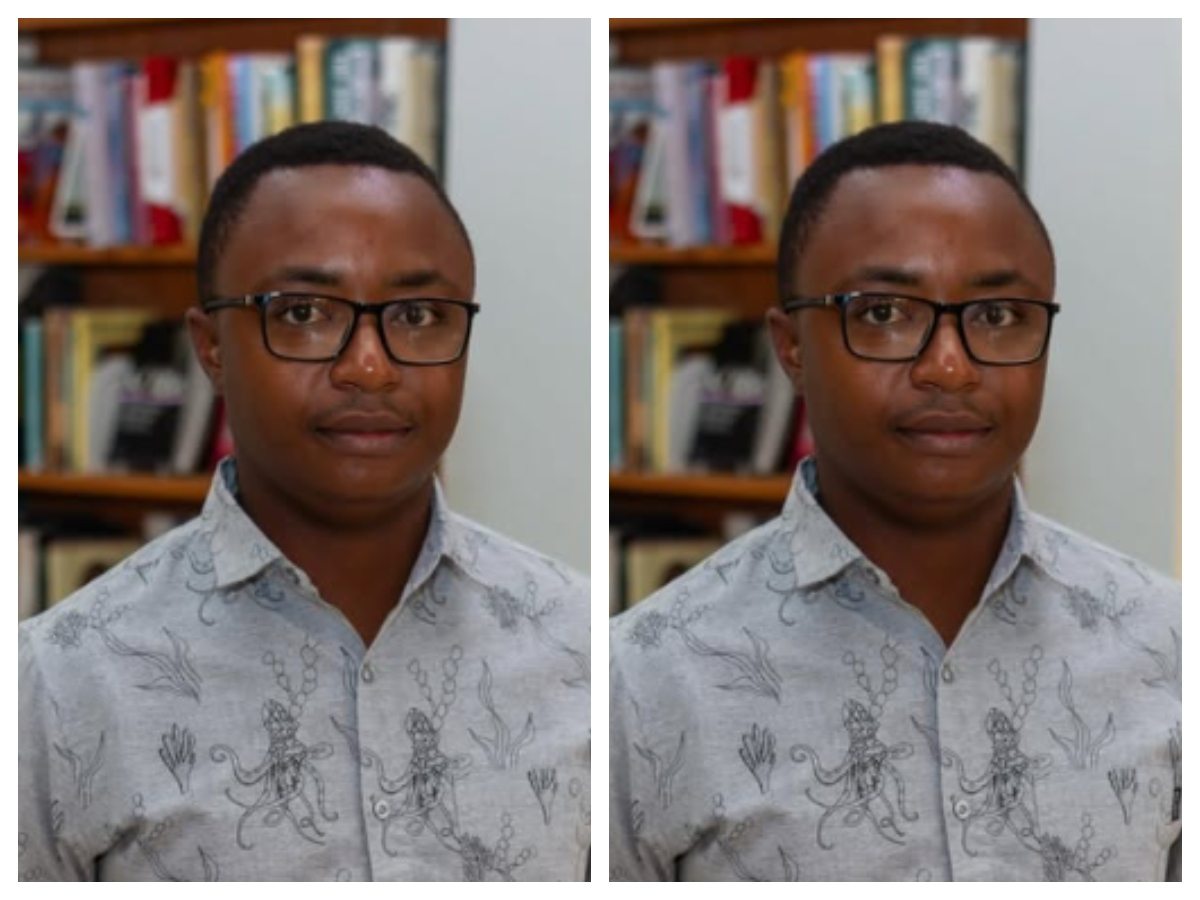
Zimbabwean author Simbarashe Kundizeza expressed relief and happiness after being exonerated of allegations that he used AI to write his award-winning short story. After a thorough month-long investigation, the esteemed Caine Prize for African Writing confirmed that his submission, The Blue Fighter, was genuinely written by him.
He was declared the winner of the $13,000 prize on October 6 for his story, which explores a family’s financial struggles after the father leaves his job to build fish tanks.
READ ALSO: Illinois: Meet the author set to open the only Black woman-owned bookstore in Evanston
Kundizeza said that the allegations were “obviously very troubling and upsetting” for him, as they felt like a denial of his identity and his abilities as a writer.
“It’s not just questioning your integrity it’s questioning your whole body of work and attributing that work to a machine that you didn’t actually write it, you didn’t think of these things,” he told Africa News.
Shortly after he was announced as the winner, an article in The Atlantic magazine reported that AI-detection software called Pangram had determined his story was nearly entirely generated by artificial intelligence. The software itself operates using AI technology.
“The whole allegation was centred on a piece of technology that’s not very accurate in my opinion. So to have a human-centred approach to that investigation was for me important,” he recounted.
“It gave me that opportunity to prove that I had written the story and to share information that I had, the details that I had about the story that proved my authorship.”
The Caine Prize has announced that it considers “the matter closed” following a thorough internal review. The review involved detailed interviews with the author and an analysis of the drafts’ metadata.
The allegations led to a broader discussion on social media, where some users raised concerns about whether Black authors are being unjustly accused in relation to AI.
READ ALSO: Meet the poet-turned-author behind the viral ‘Black Girl and her Braids’ song
Zimbabwean academic and author, Dr Reggermore Marongedze, remarked, “The moment we doubt that a human being can produce such a brilliant work it means that we are doubting the intelligence of a human being.”
He added, “But it’s also used in the racial context as well to discredit black scholars.”
The Caine Prize announced that it looks forward to celebrating Kundzeza in Zimbabwe by the year’s end. It has also introduced new measures to strengthen protections against the use of generative AI in future submissions.
This will include AI declarations from publishers who submit stories and from all shortlisted authors, along with a guiding “AI use policy for guidance.”
READ ALSO: Clarence B. Jones, the Civil Rights lawyer who helped write MLK’s ‘I Have a Dream’ speech, dies aged 95