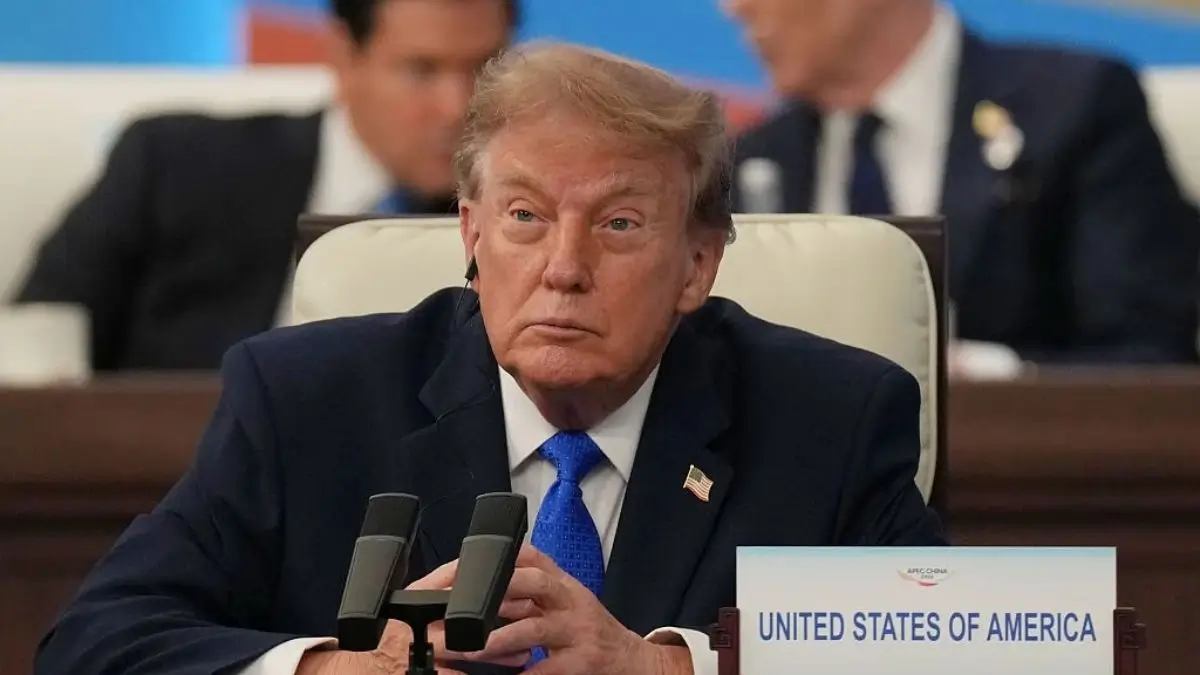
Trump nodded off during Chinese leader Xi Jinping’s keynote speech on Nov. 19, as cameras captured the moment live.
A viral video of President Donald Trump sleeping has the White House in damage control mode to contain the fallout. (Photo by Ng Han Guan – China Pool/Getty Images)
What to Know White House communications director Steven Cheung denied Trump fell asleep, offering another bizarre excuse.
Trump has earned nicknames such as “Sleepy Don,” “Dozy Don” and “The Nodfather” after repeated public dozing episodes.
Trump previously blamed boredom for closing his eyes during a Cabinet meeting, insisting he never actually fell asleep.
President Donald Trump has become an international laughingstock following a viral video taken during an overseas trip.
Trump, 80, embarked on a three-day tour of Asia, stopping in the Philippines and China for the Asia-Pacific Economic Cooperation summit.
Chinese leader Xi Jinping welcomed his American counterpart on Nov. 18. The next day, Trump thanked his host by doing the unthinkable during a public event.
Cameras captured Trump nodding off on the live broadcast from China. Clips of the elderly grandfather dozing during Xi’s keynote speech flooded the internet, sparking mockery.
Even though the entire world witnessed the American commander in chief snoozing as he sat with other world leaders, Trump’s team is screaming “fake news.”
White House communications director Steven Cheung defiantly pushed back on the narrative that his boss was asleep during another roundtable meeting.
“Fake News!” Cheung, 44, exclaimed on X. “President Trump was looking at papers in front of him while the speaker made remarks. You can clearly see his eyes move back and forth.”
Cheung added, “This is why the people despise media so much. They constantly lie.” His frustration toward the media did not shield him from an onslaught of criticism.
Other X users shared their reactions to Trump’s on-screen catnap and the White House’s attempt to convince viewers that the president was actually reviewing paperwork.
“You know there’s video, right?” one X account mockingly asked in reply to Cheung. Another disgruntled person wondered, “Are you kidding? This is so obvious. Your media bashing routine is worn out. What purpose do you serve?”
“He was looking at papers in front of him with his eyes closed? Just naked lies,” posted someone else on the social media platform.
Likewise, another critic expressed, “This is why the people despise the Trump administration so much. They constantly lie.”
“He is weak and needs to be removed from office. The world is laughing at this pathetic man,” read another scathing tweet about the president.
“From calling out Sleepy Joe to sleeping on the job,” joked one poster, referring to Trump’s nickname for his political rival, former President Joe Biden.
Trump’s repeated public dozing has earned him a string of derogatory nicknames, including “Sleepy Don,” “Dozy Don,” and “The Nodfather.”
Trump’s second term has been filled with snoozefests. In April 2025, he closed his eyes during Pope Francis’ funeral.
That year ended with the businessman-turned-politician slumbering at a Cabinet session in December.
Trump’s public dozing episodes continued into this year.
The president has been caught on camera sleeping at briefings, board meetings, and military ceremonies. He also closed his eyes during a May Memorial Day ceremony and a June NBA Finals game, fueling another round of jokes about his on-the-job naps.
Cheung’s “reading” explanation joins previous excuses that failed to persuade skeptics.
Images of Trump with his eyes closed from a November 2025 Oval Office photo-op sparked concern. At that time, the administration offered a tame but dubious response.
“The President was not sleeping; in fact, he spoke throughout and took many questions from the press during this announcement,” White House spokesperson Taylor Rogers told CNN.
By 2026, the claim that Trump was just blinking became his most used defense. The POTUS rolled out that answer to questions about his public sleepy moments in January.
“I’ll just close. It’s very relaxing to me,” he said in an interview. “Sometimes they’ll take a picture of me blinking, blinking, and they’ll catch me with the blink.”
As more videos of Trump slumping in his chair at meetings emerged regularly, the pushback from the White House grew harsher.
Yet another picture of a closed-eyed Trump in the Oval Office in May triggered the White House’s Rapid Response account to angrily tweet, “He was blinking, you absolute moron.”
Trump did not do his communication staff any favors with some off-the-cuff remarks. He admitted boredom played a part in why he is frequently recorded with his eyes closed.
“Some people said, ‘He closed his eyes.’ Look, it got pretty boring,” Trump stated in January. “I didn’t sleep. I just closed them because I wanted to get the hell outta here.”
Trump’s latest on-camera moment has left his communications team defending an explanation that many viewers refuse to accept.
His past comments about boredom and repeated denials have only added fuel to the criticism. And as more footage captures the president with his eyes closed, the White House faces an increasingly familiar problem: convincing the public to believe what it says over what they can see.


