inger Coko explains why she has little interest in recording another full album, raising questions about how ’90s R&B stars can sustain their careers.
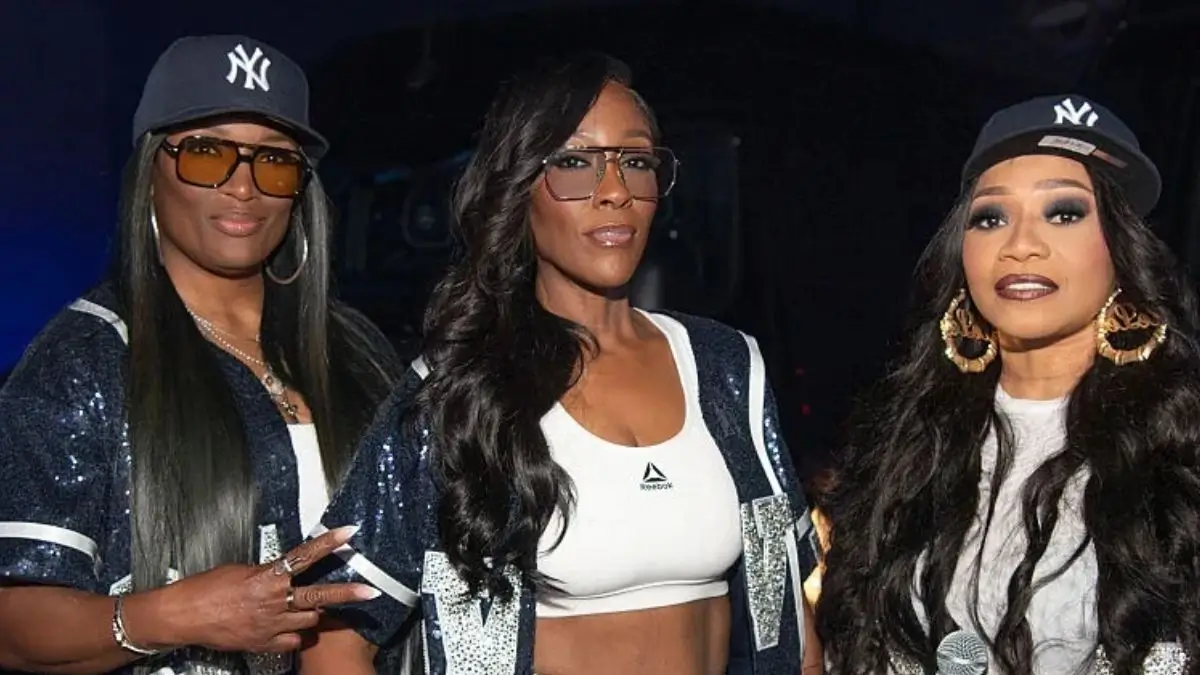
(L to R) Taj George, Coko Klemons, and Leanne Lelee Lyons. (Photo by Prince Williams/WireImage
What to Know SWV released two albums after reuniting: "I Missed Us" in 2012, which earned a Grammy nod for its rendition of “If Only, and 2016's "Still."
Coko said she would consider recording a single but has no interest in making another full album.
SWV’s 1992 debut album, It’s About Time, sold three million copies and earned 11 Billboard Music Award nominations
Coko Clemons of SWV has a question for fans who keep asking ’90s R&B artists to release new music.
Where is the support when they actually do?
The singer recently discussed the issue during an appearance on Kandi Burruss’ podcast, ‘Speak On It’.
The Xscape singer and Coko have history, coming up in the same era of music and performing with their groups on “The Queens of R&B” tour.
Therefore, when Burruss asked if SWV plans to record new music, Coko’s response was surprising.
“My reasons is like, for the older artists, when we do new music, they ask for it, but then they don’t support it. For real,” she said.
She explained that SWV already gave fans two new albums. However, neither project received the response the group expected.
“So, I’m like, what? Like, why are we going to go in the studio and do this work? And we did two albums, they were really, really good, and it did nothing,” she continued.
The R&B legend also pointed to other veteran artists who have released new projects without seeing significant commercial returns. She believes listeners in her generation have little interest in hearing new material from the artists they grew up loving.
“I’ll do a song, but a whole album. No,” she explained. “I’ve watched other people release music, and it doesn’t really do anything, like from our age group that was out before.”
Coko’s frustration comes as several of her contemporaries continue to release music. However, their newer projects often receive less attention than the records that established their careers.
Several ’90s R&B artists have continued releasing music over the years, though their newer projects haven’t received the same chart attention as their earlier hits. SWV released “I Missed Us” in 2012, followed by “Still” in 2016; TLC dropped its self-titled album in 2017; Mya recently released “Retrospect” in May, but these projects struggled to make an impact on the charts.
Although these artists have continued to give fans new material, their latest releases haven’t all matched the commercial success of their classic albums. Fans may ask veteran groups to return to the studio, but chart performance can tell a different story once the music arrives.
Some projects find an audience without making a major impact on the charts. However, the lack of commercial momentum can make it harder for veteran artists to justify the time and expense of recording another full-length album.
Despite the challenges surrounding new releases, several veteran R&B acts continue to perform for audiences.
For many concertgoers, hearing those familiar songs remains a major part of the experience. However, that support raises another question: Do fans want these artists to introduce new music into their sets, or would they rather hear the records they already know?
The singer’s remarks sparked a conversation on social media about audiences overlooking new releases from veteran R&B artists.
“She’s right. Those two new SWV albums were VERY good but the promotion was horrible so a lot of folks didn’t even know they released anything,” said one viewer.
Another said, “Come to think of it. I can’t think of a single album from a 90s-era artist released in the past 10 years that measured up to the same success as the work they did in their prime.”
One person countered, “Toni Braxton had TWO #1 hits off her last two albums 2018 & 2020 and got 3 Grammy nominations off those albums [and] also Usher is still out there doing well so as much as I love SWV, maybe it’s the newer projects aren’t that great.”
The discussion pointed to weak radio support, high production costs and labels favoring greatest-hits collections over new music. It also stressed the importance of preserving older artists’ signature sounds.
Music lovers also blamed labels for neglecting Black legacy artists, despite fans continuing to buy their albums. Some believe labels now prioritize greatest-hits collections and anthologies because they expect greater returns.
“I see why Monica is hesitant to release an album for this same reason when she can make millions performing her old hits,” said one critic.
Others pointed to Mya’s “Retrospect,” her first album in eight years, as a project that deserved more attention.
However, another fan pushed back against the idea that audiences no longer support established R&B singers.
“But it also depends on your Fan base. .. [Mariah Carey] is a prime Example. She [don’t care] if her Lambs want it. THEY GOT IT. .. a lot of these OLD ACTS be tryna appeal to NEW FOLKS and that ain’t It. Stay true to your BASE and Rock out.”
Another said, “That’s not necessarily true. Look at Jill Scott’s latest album & all her Grammy Award nominations.”
Mariah Carey won two of the five Grammy nods she received for her self-titled debut album in 1990. However, she has not received a nomination since 2009, including this year’s “Here for It All” album.
Jill Scott entered the music industry with her 2000s debut, “Who Is Jill Scott?: Words and Sounds Vol. 1,” which earned four Grammy nods.
Her current #1 album, “To Whom It May Concern,” suggests that some established R&B artists can still attract listeners and receive industry recognition for new work. It was her first album in over a decade since 2015’s “Woman.”
Ultimately, Coko’s comments have reopened a conversation about nostalgia and longevity in R&B.
Fans continue to celebrate the music that made these artists household names. However, their willingness to embrace the next chapter of those artists’ careers remains up for debate.