Spread the love
Few entertainers have left an imprint on pop culture quite like Michael Jackson. From his early beginnings as the youngest superstar of the Jackson 5 to his extraordinary rise as a global phenomenon, Jackson’s music, choreography, and unmistakable stage presence helped redefine what it meant to be an entertainer. His influence continues to transcend generations, inspiring countless musicians, dancers, and performers who have attempted to capture even a fraction of his artistic brilliance.
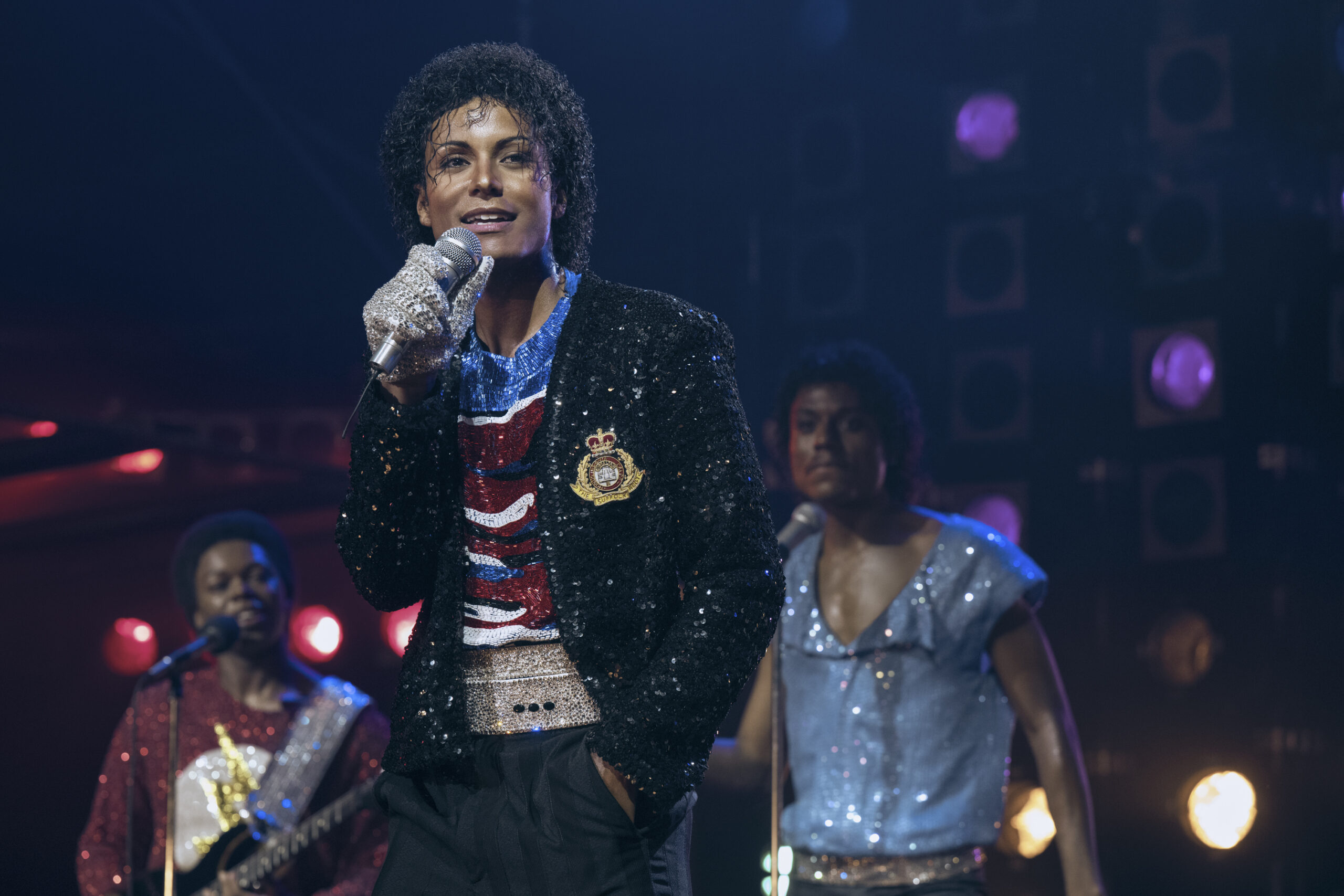
In director Antoine Fuqua’s biographical film Michael, that extraordinary legacy takes center stage through the performances of Jaafar Jackson and Juliano Valdi. The two actors portray the King of Pop during different chapters of his life, with Valdi embodying the youthful exuberance of a child discovering his extraordinary gifts and Jackson stepping into the role of his legendary uncle as he navigates the triumphs, pressures, and complexities of global superstardom.
During a virtual press conference featuring both actors, the conversation explored everything from the physical demands of recreating Jackson’s iconic performances to the emotional vulnerability required to portray the man behind the music. For Jaafar, the experience represented an opportunity to honor his family’s legacy while discovering new dimensions of himself as an artist. For Valdi, it was the culmination of a childhood fascination that began with an unforgettable introduction to Jackson’s music.
A New Generation Discovers the King of Pop
One of the most significant aspects of Michael is its ability to introduce Jackson’s music and performances to audiences who weren’t alive during the height of his career. While longtime fans have decades of memories associated with songs like “Billie Jean,” “Bad,” and “Smooth Criminal,” younger audiences are experiencing those moments with fresh eyes. For Jaafar Jackson, witnessing that enthusiasm has been one of the most rewarding parts of the film’s reception.
“I am beyond proud to see how many new fans have come up and these young kids who didn’t get the chance to grow up with Michael’s music,” Jackson shared.
He explained that watching children learn his uncle’s choreography reminds him of early videos of Valdi performing Jackson’s signature dance moves before being cast in the film.
“It’s been amazing to see these newer fans of this whole new generation have this rise of Michael’s music and have an understanding of his artistry,” he continued.
Beyond the film itself, Jackson has enjoyed watching audiences recreate performances, share reaction videos, and celebrate memorable scenes across social media. Those spontaneous expressions of appreciation have reinforced the enduring appeal of an artist whose influence reaches far beyond any particular era. For Valdi, that influence began at home when his grandmother introduced him to the “Smooth Criminal” music video. What initially seemed like an ordinary experience became a defining moment in his young life.
“In that moment, I thought it was a normal day, but looking back at it, I think that was one of the most important days of my life,” Valdi recalled. “I think that’s one of the reasons why I’m here today.”
His admiration extends beyond Jackson’s ability to entertain. Valdi sees the late performer as an example of extraordinary discipline and artistic commitment.
“He’s amazing, and he’s a true perfectionist,” the young actor said.
That understanding of Jackson’s perfectionism would become particularly important as both actors prepared to recreate some of the most recognizable performances in music history.
Finding Michael Without Simply Imitating Him
Portraying an entertainer whose movements, vocal inflections, and mannerisms have been studied and imitated around the world presents an unusual challenge. Audiences already possess a deeply familiar image of Michael Jackson, making authenticity essential while leaving little room for an interpretation that feels artificial. Jaafar approached that challenge by developing a rehearsal process that allowed him to absorb his uncle’s movements without becoming dependent on copying them. He described alternating between extended periods of studying concert footage and stretches when he deliberately avoided watching Jackson’s performances.
“There would be times when I wouldn’t watch it for many months,” he explained. “The reason I did that is I didn’t want to feel like I’m stuck to trying to imitate every move.”
Instead, his objective was to develop an instinctive relationship with the choreography.
“My mindset was to get to a place where I feel like I had ownership of the moves without trying to compare mine to Michael’s,” Jackson said.
Once he established that confidence, he returned to the original performances to examine details such as energy, timing, and execution. His rehearsals involved an ongoing balance between self-criticism and acknowledging his progress. The actor even developed a personal benchmark for determining whether he had achieved the necessary authenticity.
“I would tell myself until I can fool myself in the mirror when I’m rehearsing, then I’m not quite there.”
Eventually, the choreography became so familiar that Jackson could complete entire performances without consciously thinking about individual movements. He described those experiences as entering a flow state, where the music rather than his memorization dictated the performance.
“I wasn’t thinking of the choreography or each section of the song,” he explained. “I was able to just let the music kind of dictate the energy of how much I was putting into the moves.”
Valdi, meanwhile, faced the challenge of portraying a much younger Michael whose musical identity was still developing alongside his brothers. Although the choreography and performance style of the Jackson 5 differed considerably from Jackson’s later solo career, Valdi emphasized the importance of bringing something personal to his interpretation. He credited “putting a little bit of my own personality into my performance” with helping him avoid simply reproducing the young star’s familiar movements. For both actors, the objective was not merely to resemble Michael Jackson but to make audiences believe they were witnessing a person rather than an impersonation.
The Emotional Weight Behind the Iconic Performances
While Michael Jackson’s spectacular performances remain an essential part of his legacy, the film also examines moments when the superstar’s public confidence gives way to private vulnerability. During the press conference, Black Girl Nerds asked Jaafar Jackson which of those quieter scenes demanded the most from him as an actor. His answer centered on a pivotal moment following the Pepsi commercial accident, when Jackson suffered burns during filming. Jaafar identified a hospital scene in which a doctor informs Michael that he will need pain medication and that his hair will not grow back in the affected area.
“I knew that going into it, how important that moment was in Michael’s life, how pivotal of a moment that was,” Jackson explained.
He noted that Michael had been reluctant to take medication, making the doctor’s news particularly difficult within the film’s portrayal. Rather than relying on extensive dialogue or dramatic physical gestures, Jaafar wanted to communicate the character’s emotional response through subtle expressions.
“I just want to make sure I captured his essence and his whole being as much as I can, even just through the eyes, without having to say a word.”
That approach became the guiding principle for his performance in the scene.
“Just let the eyes tell the story,” he recalled telling himself.
The moment illustrates the distinction between recreating Jackson’s extraordinary public persona and portraying the emotional experiences of the individual behind it. While the concert sequences demand physical precision and explosive energy, scenes like the hospital encounter require restraint and a willingness to expose vulnerability. For Jaafar, those contrasting demands were equally important to his interpretation of Michael.
The Pressure of Carrying a Family Legacy
Beyond the demands of acting, Jaafar Jackson faced a responsibility that few performers could fully understand. As Michael Jackson’s nephew, he was not simply portraying a legendary entertainer but representing a deeply personal family history. Throughout production, that responsibility became a motivating force rather than an obstacle.
Jackson explained that he constantly reminded himself of the importance of arriving on set prepared and maintaining the discipline necessary to meet the film’s expectations. Even on days when physical exhaustion made dancing difficult, he continued his preparation through research, listening to music, and studying concert footage.
“I always looked at it as good pressure,” he said.
His relationship with director Antoine Fuqua also helped reinforce that commitment. Knowing Fuqua trusted him to prepare thoroughly encouraged Jackson to remain focused on the work rather than outside expectations. He described immersing himself in his uncle’s artistic world and avoiding distractions that might interfere with his performance. Yet the challenge of portraying Michael also raised larger questions about identity and individuality within one of entertainment’s most recognizable families.
Jaafar acknowledged that comparisons to his uncle were nothing new. Even before the film, his singing voice sometimes drew comparisons to Michael’s distinctive tone. Rather than viewing those comparisons negatively, he considered them a compliment. However, he also recognized that trying to surpass his uncle’s achievements would be neither productive nor realistic.
“I don’t think it’s a healthy mindset to try and outdo that,” he explained.
Instead, Jaafar sees his responsibility as continuing the values passed down through his family, particularly philanthropy, artistic expression, and the ability to bring people together.
For him, participating in Michael offered an opportunity to better understand both his uncle and himself.
“I feel like I’ve learned so much about my work ethic, my ability to be vulnerable, to show up and be prepared,” he shared.
Those discoveries have also influenced how he thinks about his career beyond the biopic. Ultimately, Jackson believes there is room to honor the extraordinary accomplishments of previous generations while developing an independent artistic identity.
“There’s no trying to outweigh Michael’s legacy in any way,” he said. “It’s continuing it.”
Stepping Into Michael’s Shoes
For both actors, one of the most transformative moments occurred when they first saw themselves fully dressed as Michael Jackson. Valdi recalled preparing to film the Jackson 5’s performance of “ABC.” Standing in his trailer wearing the group’s recognizable stage costume, he experienced a surreal realization that he was about to embody the young entertainer he had admired for years. The costume, combined with the anticipation of performing, made the experience feel particularly significant. Valdi knew the sequence demanded a memorable performance, and looking back, he expressed pride in what he accomplished.
He arrived in the full “Bad” ensemble, complete with its elaborate buckles and zippers, along with the hair and makeup that completed the look.
“There was no way of not looking in the mirror and not being convinced,” he recalled.
Beginning production with such an iconic performance helped establish the confidence he needed throughout filming. The experience also reinforced how much of Jackson’s artistic identity was communicated through visual presentation. His clothing, choreography, and physical presence were not separate elements but components of a carefully developed performance style. When asked which historical performances they would most like to experience firsthand, the actors offered choices reflecting their different connections to Jackson’s career. Valdi selected the 1988 Bad Tour, specifically the opportunity to watch Jackson perform “Smooth Criminal.” Jaafar chose a much earlier moment, expressing his desire to witness Jackson perform “Ben” at the Academy Awards. Their answers demonstrated the remarkable range of an entertainer whose career evolved from child prodigy to international superstar.
More Than Music: The Compassion Behind Michael Jackson
Although the film highlights Jackson’s remarkable musical achievements, Valdi hopes younger audiences will leave theaters curious about another aspect of his life. During the press conference, Black Girl Nerds asked the young actor what part of Jackson’s artistry or personality he hoped his peers would explore after seeing the movie.
His response focused on the entertainer’s compassion.
“Definitely his love and generosity,” Valdi said. “Because you can see in this movie that Michael Jackson cared about people.”
He pointed to a scene in which Jaafar’s portrayal of Michael visits a sick child in the hospital. For Valdi, the interaction demonstrates the emotional connection Jackson sought to establish with people outside the concert arena. The young actor also referenced Jackson’s affection for animals, including the giraffe, birds, and chimpanzee depicted in the film.
“He cared for everybody and everything,” Valdi said.
His comments suggest that the film’s impact on younger audiences may extend beyond an appreciation for the moonwalk, elaborate costumes, and iconic music videos. For Valdi, understanding Jackson’s generosity is just as important as recognizing his extraordinary talent.
Why Michael Jackson Still Brings Audiences Together
The theatrical reception of Michael became another major topic during the conversation. With audiences reportedly singing along, dressing as Jackson, and dancing during screenings, the film inspired an atmosphere resembling a celebration of the musician’s career. Jaafar believes the response speaks to the emotional power of his uncle’s music and its ability to resonate with people experiencing it under vastly different circumstances.
For older fans, Jackson’s songs can evoke memories of growing up during the 1970s and 1980s. For younger listeners, the appeal comes from discovering the explosive energy and theatricality of his performances for the first time. Jackson compared watching one of his uncle’s concerts to experiencing an action sequence.
“It’s the wardrobe. It’s the very dynamic moves that are so explosive,” he explained. “The energy there, it’s very infectious. You want to be a part of it.”
That sense of participation, he believes, helps explain why Jackson’s performances continue to attract audiences long after their original debut. Jaafar also expressed gratitude for being part of a film that has inspired audiences around the world to revisit the music.
“To play a hand in showing a side of that to a whole new audience has been the greatest opportunity in my life,” he said.
For him, the film’s reception reinforces the continuing relevance of Jackson’s artistry and the discipline that defined his career.
Two Performances, One Extraordinary Legacy
Despite portraying the same individual, Jaafar Jackson and Juliano Valdi spent much of production working separately. Their performances were connected through the character’s life story rather than extensive shared time on set. That separation made watching the completed film a particularly meaningful experience for both actors.
Valdi praised Jaafar’s ability to capture Michael’s energy as an adult, describing his performance as incredible. He was especially impressed by the recreation of the Bad Tour, which he felt closely resembled footage of Jackson’s original performances. At one point, Valdi admitted becoming so immersed in the sequence that he nearly forgot he was watching Jaafar rather than Michael himself.
Jaafar expressed similar admiration for Valdi’s portrayal of the young entertainer. Because he had not been present for most of Valdi’s filming, Jaafar relied on updates from director Antoine Fuqua, producer Graham King, and other members of the production team. He repeatedly heard enthusiastic praise about the Jackson 5 sequences but did not fully appreciate the extent of Valdi’s performance until watching the completed film.
“I was honestly blown away,” Jackson recalled.
He was particularly moved by the contrast between the young Michael’s joy onstage and his vulnerability in more intimate scenes. Jaafar highlighted a moment in which the young character is alone in a bathroom, emotionally withdrawn and holding himself, as an example of Valdi’s ability to communicate feelings beyond the musical performances.
“To be able to capture those little details as a child, it’s very, very moving,” he said.
He went on to describe Valdi’s work as a powerful performance, praising the young actor for making him feel as though he was watching Michael rather than someone portraying him. The admiration between the two performers was evident throughout the conversation. Each approached the role from a different perspective, but both shared an understanding of the responsibility that accompanied depicting such an influential cultural figure.
Keeping the Music and the Legacy Alive
At its heart, Michael is a cinematic exploration of an artist whose influence continues to shape popular culture. Yet the performances of Jaafar Jackson and Juliano Valdi reveal that bringing such an extraordinary figure to the screen requires more than an accurate recreation of familiar dance moves, costumes, or concert sequences. It demands an understanding of the human experiences that existed alongside the spectacle.
Together, their performances connect two distinct periods of a remarkable artistic journey, from the young boy whose voice captivated audiences alongside his brothers to the adult performer who commanded stadiums around the world.
Perhaps the most meaningful takeaway from the press conference was the recognition that Michael Jackson’s legacy is not confined to the era in which his greatest achievements occurred. His music continues to inspire movement, curiosity, creativity, and emotional connections among people who never witnessed his performances firsthand.
Through Michael, Jaafar Jackson and Juliano Valdi have helped bring those experiences to another generation while discovering something about their own artistry along the way. Their interpretations may represent different stages of one man’s life, but they share a common purpose: honoring the dedication, imagination, and extraordinary presence that made Michael Jackson one of the most influential entertainers in music history.
Like this: Like Loading…


